
Epoxy vs Polyaspartic Garage Coatings for DFW Homes
By Legacy Industrial Coatings Team
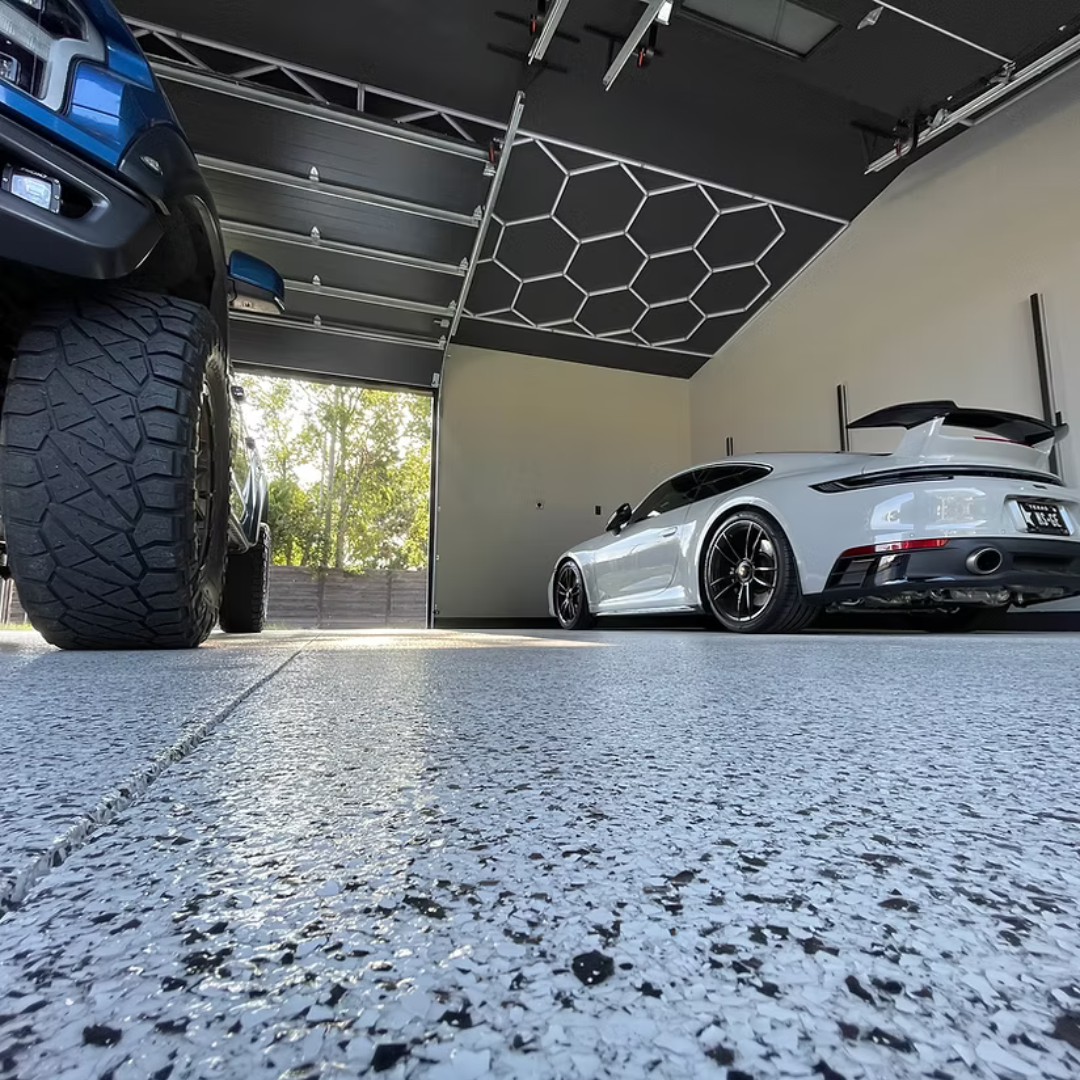
If you're researching garage floor coatings in the Dallas-Fort Worth area, you've likely narrowed it down to two serious contenders: traditional epoxy and polyaspartic coatings. Both deliver impressive results, but they perform very differently in our Texas climate. After installing hundreds of garage floors across Plano, Frisco, McKinney, and the broader DFW Metroplex, we've seen exactly how each system holds up in real-world conditions.
Let's cut through the marketing hype and compare these two coating systems side by side, so you can make an informed decision for your home.
Installation Time: The Biggest Practical Difference
Here's where polyaspartic coatings shine brightest. Traditional epoxy requires 5-7 days of full cure time before you can park vehicles on it. In contrast, polyaspartic coatings cure in just 24 hours—sometimes less in our warm Texas climate. For homeowners in Allen or Prosper who can't afford to have their garage out of commission for a week, this matters significantly.
Epoxy installations typically require a two-coat system applied over consecutive days, with additional time for the topcoat to fully harden. Polyaspartic systems can often be completed in a single day, with the floor ready for light foot traffic within hours and vehicles the next day. When you factor in DFW's unpredictable weather and busy schedules, that time savings becomes a real advantage.
Temperature Tolerance: Critical for Texas Summers
DFW summers regularly push past 100°F, and garage floors can reach 130°F or higher. Polyaspartic coatings handle this heat exceptionally well—they won't yellow, soften, or release hot-tire pickup the way some epoxies can. We've seen older epoxy floors in Frisco and McKinney show tire marks and slight softening during peak summer months, especially on darker color choices.
That said, quality epoxy systems with proper UV-stable topcoats perform admirably in most residential garages that aren't exposed to constant direct sunlight. The key difference is the safety margin: polyaspartic gives you more thermal protection without requiring additional topcoat layers.
Durability and Chemical Resistance
Both systems offer excellent protection against oil, antifreeze, gasoline, and the typical chemicals found in DFW garages. However, polyaspartic edges ahead in abrasion resistance and flexibility. Its slightly elastic nature means it moves with your concrete as it expands and contracts with temperature changes—something that happens year-round in North Texas.
Epoxy is extremely hard and rigid when fully cured, which provides excellent impact resistance but can be more prone to cracking if your concrete slab develops movement. In newer homes throughout Plano and Prosper where concrete is still settling, polyaspartic's flexibility offers added insurance.
Cost Comparison: What You'll Actually Pay
Traditional epoxy systems typically run $3-$7 per square foot for professional installation in the DFW area, depending on the flake coverage and prep work required. Polyaspartic coatings generally cost $7-$12 per square foot. That's a significant premium—roughly 40-60% more for most residential garages.
The higher cost reflects the superior chemistry, faster installation, and enhanced performance characteristics. For a standard 400-square-foot two-car garage, you're looking at the difference between $1,600-$2,800 for epoxy versus $2,800-$4,800 for polyaspartic. Whether that premium is worth it depends on your priorities and how long you plan to stay in your home.
Aesthetic Options and Appearance
Both systems offer beautiful decorative flake options, solid colors, and metallic finishes. Epoxy has a slightly thicker build that can create more depth in flake systems, while polyaspartic produces a harder, clearer finish that some homeowners prefer for its glass-like appearance.
One often-overlooked advantage of polyaspartic: it doesn't amber or yellow over time like epoxy can, especially in garages with windows or door exposure. If you're choosing lighter colors or a clear coat over stained concrete, polyaspartic maintains that fresh appearance longer in our intense Texas sunlight.
Making the Right Choice for Your DFW Garage
Choose epoxy if you want proven performance at a more accessible price point, can accommodate a week-long installation timeline, and have a newer home with stable concrete. It's still an excellent coating system that will serve you well for 10-15 years with proper care.
Choose polyaspartic if you need your garage back quickly, want maximum heat resistance for a space that gets direct sun exposure, prefer the longest possible lifespan (15-20+ years), and can justify the higher investment. For many homeowners in Frisco, McKinney, and Plano who view their garage as an extension of their living space, it's worth every dollar.
Both systems dramatically outperform bare concrete or DIY store-bought coatings. The real question isn't which is better in absolute terms—it's which is better for your specific situation, budget, and expectations. At Legacy Industrial Coatings, we install both systems throughout the Dallas-Fort Worth Metroplex and can help you make the choice that makes the most sense for your home.
Ready to transform your floors?
Talk to our team and get a clear plan for your space.