
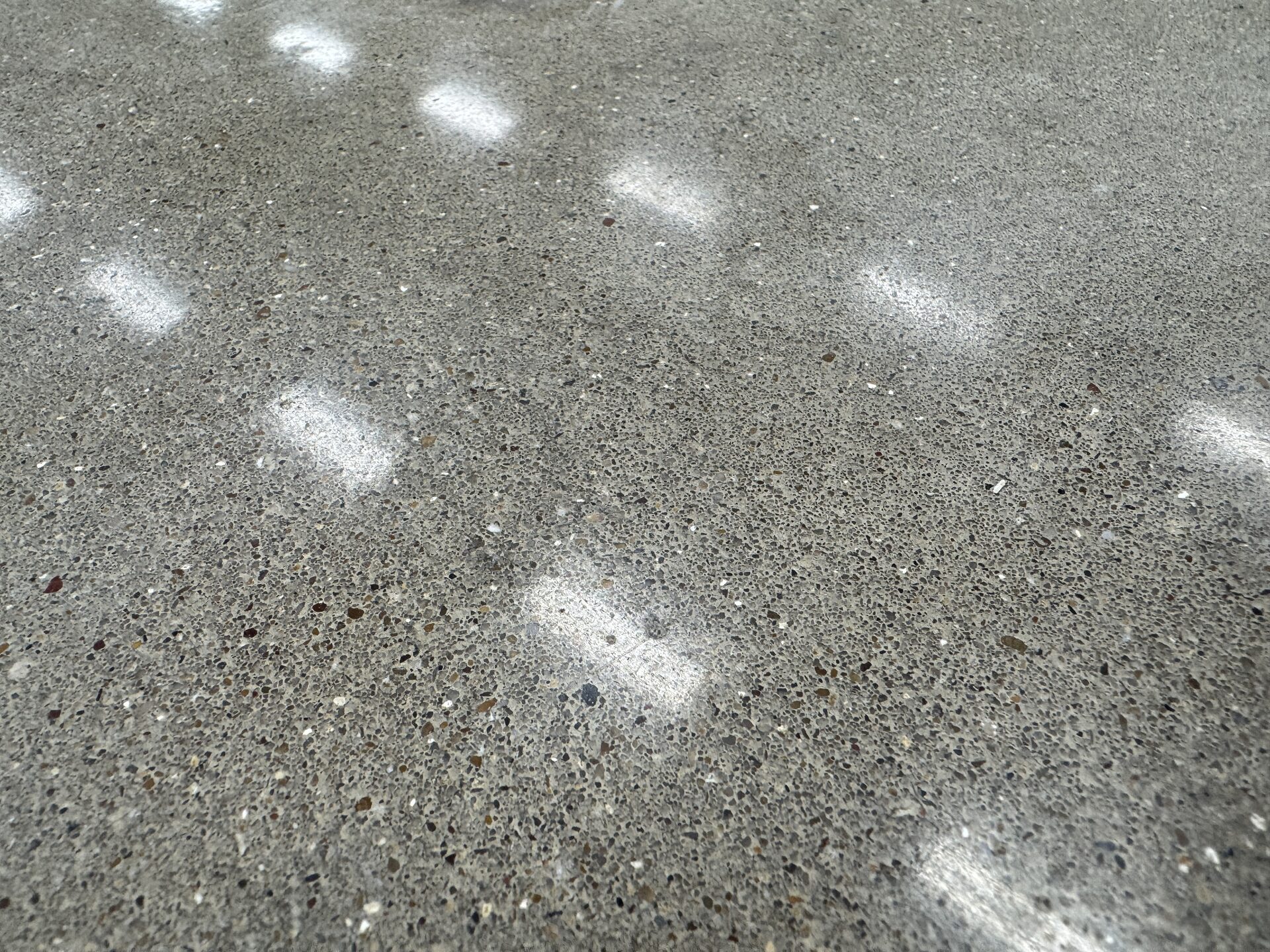
Pharmaceutical Manufacturing Plant — 21,000 sq ft Polished Concrete
Location
Dallas, TX
Service
High-Gloss Polished Concrete (800 grit) + Polyurea Crack & Divot Repair
Scope
21,000 sq ft
Timeline
3–4 overnight shifts (9 PM – early morning), zero production downtime
The Challenge
This was a fully operational pharmaceutical manufacturing plant in Dallas, TX, inside a 40-year-old building. The slab had four decades of forklift traffic, equipment moves, and thermal cycling on it — and it showed. Wide structural cracks ran through high-traffic lanes, surface divots and pop-outs were everywhere, and the slab had visible undulation across the 21,000 square foot footprint.
Pharmaceutical environments are unforgiving floors. Dust generation has to be controlled, the surface has to clean easily, every joint and crack is a place for contamination to collect, and the floor has to handle constant pallet jack and forklift traffic without breaking down again. A bandage approach — a thin coating poured over the existing damage — would have failed within months and locked all that contamination in.
The other constraint was operational. The facility runs production around the clock, and downtime in a pharma plant is measured in five and six figures per hour. We could not stop the line. Every square foot of work had to happen overnight, after the day shift left, and the floor had to be back in service before morning operations restarted.
Our Approach
We mobilized after 9 PM each night and worked straight through into the early morning, four nights running. The first phase was a full survey and repair pass: every crack, divot, spall, and pop-out across the 21,000 sq ft was chased out, vacuumed clean, and filled with semi-rigid polyurea joint and crack filler. Polyurea cures fast, bonds tightly to the surrounding concrete, and grinds at the same rate as the slab — so when we polished over it, the repairs disappeared into the floor instead of telegraphing through as soft spots.
From there we ran the full mechanical polishing progression. Metal-bond diamonds for the initial cut to flatten the surface and open the slab, then resin-bond diamonds stepping up through the grits — 100, 200, 400, 800 — with a lithium silicate densifier worked into the surface mid-process to harden the concrete and lock in the shine. The result is an 800-grit high-gloss polish: a finish you can read reflections in, achieved purely through mechanical refinement of the existing slab. No coatings, no topical sealers that wear off — the shine is the concrete itself.
The client's spec did not require ASTM E1155 floor flatness inspections (FF/FL numbers), so we did not bring the certified F-Meter equipment to this site. It's worth noting we are equipped to perform FF (flatness) and FL (levelness) testing under ASTM E1155 on polished concrete projects when the spec calls for it — typical for warehouses with high-bay racking, automated guided vehicles, or pharma cleanrooms with strict tolerance requirements. On those jobs we measure the slab before grinding to set a baseline, polish to spec, and provide documented FF/FL numbers to the GC or owner. If your project needs documented flatness, we can scope it in.
The Result
By the end of the fourth night the floor was back in service for the day shift — only now it was a single, continuous, mirror-finish polished slab across the entire 21,000 sq ft. The cracks and divots that had defined the floor for years were gone. The undulation was visibly knocked down by the grind. The surface no longer generates dust under traffic, cleans with a routine auto-scrubber, and gives the plant the kind of bright, reflective floor that pharma auditors expect to see when they walk in.
Polished concrete is the lowest lifecycle-cost floor we install for facilities like this. There is no coating to fail, no recoat cycle to budget for, and the densifier-hardened surface gets harder and more wear-resistant over time, not less. Maintenance is a clean water auto-scrub — that's it.
If you operate a pharmaceutical, food, manufacturing, or distribution facility on an aging slab and the thought of shutting down production has been the thing stopping you from fixing the floor — that's the exact problem we solve. Overnight execution, full crack and divot repair, true mechanical polish, and ASTM E1155 flatness documentation when the spec requires it.