
Commercial Epoxy Flooring Cost per Square Foot in DFW (2026 Guide)
By Legacy Industrial Coatings Commercial Team
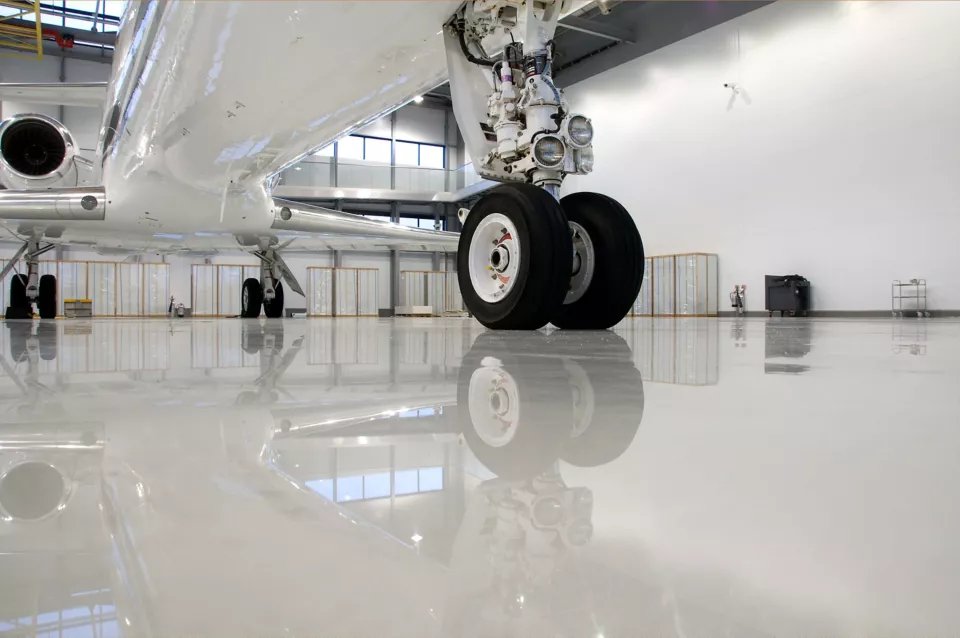
Updated October 2026 · Written by the Legacy Industrial Coatings commercial team in Plano, TX
Quick answer: In the Dallas-Fort Worth market, commercial floor coatings typically cost $3 to $18 per square foot installed in 2026. Polished concrete runs about $3–$9/SF, high-build epoxy $5–$9/SF, quartz broadcast systems $8–$13/SF, and urethane cement $10–$18/SF. Surface prep, concrete moisture, joint and crack repair, and project size usually move the final number more than the coating itself.
If you manage a warehouse, plant, kitchen, school, clinic, or retail space, you have probably seen bids for "epoxy" that differ by 3x. That spread is rarely about margin. It is almost always about thickness, prep, moisture, and what is (or is not) included. This guide breaks down what each commercial system actually costs, what drives the price, and how to compare bids apples to apples.
How much does commercial epoxy flooring cost per square foot?
Here are typical installed ranges we see across DFW for commercial projects of roughly 5,000 square feet and up on a structurally sound slab. Smaller areas carry mobilization minimums, so expect a higher per-foot number under about 1,500 SF.
| Floor system | Typical build | Installed cost per SF (DFW, 2026) | Best fit |
|---|---|---|---|
| Densified and sealed concrete | Penetrating densifier + sealer | $1.50 – $4 | Light storage, back-of-house, budget refreshes |
| Mechanically polished concrete | Diamond grind, densify, polish, guard | $3 – $9 | Warehouses, distribution, retail, showrooms |
| Thin-film epoxy | 2 roll coats, roughly 8–20 mils | $3 – $6 | Mechanical rooms, light-duty storage |
| High-build industrial epoxy | 100% solids, roughly 20–60 mils | $5 – $9 | Manufacturing, forklift aisles, labs, hangars |
| Flake (chip) broadcast system | Epoxy or polyurea base, full flake, polyaspartic top | $6 – $10 | Locker rooms, swim schools, vet clinics, retail back rooms |
| Quartz broadcast system | Double-broadcast, about 1/8 inch | $8 – $13 | Restrooms, healthcare, wet areas needing slip resistance |
| Urethane cement | Trowel or slurry, 3/16 to 3/8 inch | $10 – $18 | Food and beverage, commercial kitchens, breweries, washdown |
| ESD / static-control | Conductive or dissipative system | Priced by specification | Data centers, electronics, labs |
These are budgeting ranges, not quotes. A firm price requires a site visit and, for any resinous system, concrete moisture testing.
What drives the cost of a commercial floor coating?
Two floors with the same product can land $4/SF apart. These seven factors explain almost all of the difference.
1. Surface preparation
Coatings bond to profile, not to smooth concrete. Thin-film systems need a lighter profile, while thicker epoxy, quartz, and urethane cement systems need an aggressive profile created by diamond grinding or shot blasting. Removing an existing coating, VCT mastic, or carpet adhesive adds labor and disposal. Prep is the single most common place low bids cut corners, and it is the leading cause of peeling floors.
2. Concrete moisture
Moisture vapor moving up through a slab is the number one reason resinous floors blister and delaminate. The two standard tests are ASTM F2170 (in-slab relative humidity probes) and ASTM F1869 (calcium chloride surface emission test). Many resin flooring manufacturers require a moisture mitigation system once in-slab RH exceeds roughly 80%, though limits vary by product. A two-part epoxy moisture vapor barrier rated to ASTM F3010 typically adds about $3–$8/SF. North Texas slabs on grade, new pours that have not cured long enough, and older buildings without a proper vapor retarder are common culprits. Urethane cement tolerates higher moisture than standard epoxy, which sometimes makes it the more economical choice on a wet slab.
3. Cracks and joints
Crack repair usually runs about $3–$10 per linear foot depending on width and depth. In forklift traffic, control joints should be filled with a semi-rigid polyurea joint filler so wheel impact does not break the coating edge. A warehouse with miles of saw-cut joints can carry a meaningful line item here.
4. System thickness and build
Thickness is durability. A 10-mil roll coat and a 40-mil self-leveling epoxy can look the same on day one, but under pallet jacks and forklifts the thin film wears through in a few years. Always ask for mils (or fractions of an inch) per coat in writing.
5. Cove base, drains, and slope
Food service, healthcare, and washdown areas usually need an integral cove base that runs the floor seamlessly up the wall. Expect roughly $12–$18 per linear foot for urethane cement cove. Sloping to drain or tying into trench drains adds further cost.
6. Downtime, phasing, and schedule
Nights, weekends, and phased work around live operations add labor premiums. Fast-cure chemistries such as polyaspartic topcoats cost more per gallon but can return a space to service in hours instead of days, which often saves money overall when downtime is expensive.
7. Project size and access
Mobilization, equipment, and crew setup are fixed costs. They get spread thin on a 30,000 SF warehouse and heavy on a 600 SF break room.
Example commercial flooring budgets
The examples below are illustrative math using the ranges above, not quotes.
- 25,000 SF distribution warehouse, polished concrete with joint fill: at roughly $3.50–$5.50/SF, a budget of about $87,500–$137,500.
- 8,000 SF manufacturing floor, high-build epoxy over a failing old coating: about $6–$9/SF for the system plus coating removal, roughly $56,000–$90,000 before any moisture mitigation.
- 2,500 SF commercial kitchen, 1/4 inch urethane cement with 6 inch integral cove: about $12–$16/SF for the floor plus cove footage, typically $32,000–$48,000 depending on wall length and drains.
Is the cheapest bid the most expensive floor?
Often, yes. The number that matters to a facility manager is cost per year of service, plus the cost of shutting down to redo the floor. A thin-film epoxy in forklift traffic may need recoating in two to five years. A properly prepped high-build epoxy commonly lasts ten years or more in the same space, and urethane cement regularly delivers 15–20+ years in food processing. If a redo forces you to shut down a production line or a kitchen, the downtime can cost more than the floor.
Epoxy vs. polished concrete vs. urethane cement: which fits your facility?
- Warehouses and distribution centers: polished concrete is usually the lowest lifecycle cost. Choose high-build epoxy where you need color-coded safety zones or chemical resistance. See our warehouse flooring page and our breakdown of polished concrete vs. epoxy for DFW warehouses.
- Manufacturing: high-build epoxy or epoxy mortar for impact and chemical exposure. See manufacturing floor coatings.
- Commercial kitchens, food and beverage, breweries: urethane cement, because hot water, steam cleaning, and organic acids break down standard epoxy.
- Healthcare and schools: seamless resinous systems with integral cove for sanitation. See healthcare flooring and school flooring.
- Data centers and electronics: ESD-rated systems tested to the facility's resistance spec. See data center flooring.
- Retail and showrooms: polished concrete or decorative resinous systems. See retail flooring.
How to compare commercial flooring bids
Put every bid side by side and check that each one answers these questions in writing:
- What is the exact manufacturer and product for each coat?
- What is the thickness of each coat (mils or inches)?
- What prep method will be used, and what concrete surface profile (CSP) will be achieved?
- Is ASTM F2170 or F1869 moisture testing included, and what happens if the slab fails?
- Are crack repair, joint fill, and cove base included or extra?
- What is the cure time to foot traffic, to vehicle traffic, and to full chemical resistance?
- Is the warranty from the manufacturer, the installer, or both, and what does it exclude?
- Is night, weekend, or phased work included in the price?
If one bid is far lower than the others, the gap is almost always hiding in items 2 through 5.
Why DFW facility teams work with Legacy Industrial Coatings
Legacy Industrial Coatings is a commercial and industrial floor coating contractor headquartered at 6010 W Spring Creek Parkway in Plano, Texas, serving the entire Dallas-Fort Worth Metroplex. We install systems from manufacturers including Sherwin-Williams, Sika, Polymer Nation, Neogard/Hempel, and Floor Guard, which lets us specify the right chemistry for the floor instead of forcing one product onto every job. Every resinous bid we write spells out product, thickness, prep method, and moisture plan so you can compare it line by line. See our commercial case studies for real projects, including pharmaceutical manufacturing polished concrete and a restaurant pump room with integral cove base.
Need a budget number for your facility? Request a commercial estimate or call 214-305-6516.
Frequently asked questions
How much does epoxy flooring cost per square foot for a commercial building?
In Dallas-Fort Worth, commercial epoxy flooring typically costs $3–$6 per square foot for a thin-film roll coat and $5–$9 per square foot for a high-build 100% solids system, installed. Moisture mitigation, coating removal, and heavy crack repair are usually priced on top.
Is polished concrete cheaper than epoxy?
Usually, on a large slab in good condition. Polished concrete runs about $3–$9 per square foot and has no coating to wear through or peel, so lifecycle cost is often lower in warehouses and retail. Epoxy is the better choice when you need chemical resistance, color-coded zones, or a sealed, non-porous surface.
How much does concrete moisture mitigation add to a flooring project?
A two-part epoxy moisture vapor barrier rated to ASTM F3010 typically adds about $3–$8 per square foot. It is needed when ASTM F2170 or F1869 testing shows moisture above the coating manufacturer's limit, and skipping it is the most common cause of blistering and delamination.
How long does commercial epoxy flooring last?
A properly prepped high-build epoxy floor commonly lasts 10 years or more in commercial and light industrial use. Thin-film epoxy in forklift traffic may need recoating in two to five years. Urethane cement often lasts 15–20+ years in food and beverage environments.
How long does a commercial floor coating installation take?
Most commercial projects of 5,000–15,000 square feet take roughly three to seven working days including prep, depending on the system and number of coats. Many systems accept foot traffic within 12–24 hours and vehicle traffic within 48–72 hours, while fast-cure polyaspartic systems can return to service the same or next day. Work can be phased or scheduled on nights and weekends to keep operations running.
Can I get a firm per-square-foot price over the phone?
You can get a budget range over the phone. A firm price requires a site visit to check the slab condition, existing coatings, joints, and moisture, because those factors can move the price by several dollars per square foot.
Ready to transform your floors?
Talk to our team and get a clear plan for your space.