

Urethane Cement Flooring
Urethane cement is the floor for hot, wet, hard-working spaces. It handles steam cleaning, hot oil, food acids and thermal shock where standard epoxy can crack or let go.
What Is Urethane Cement Flooring?
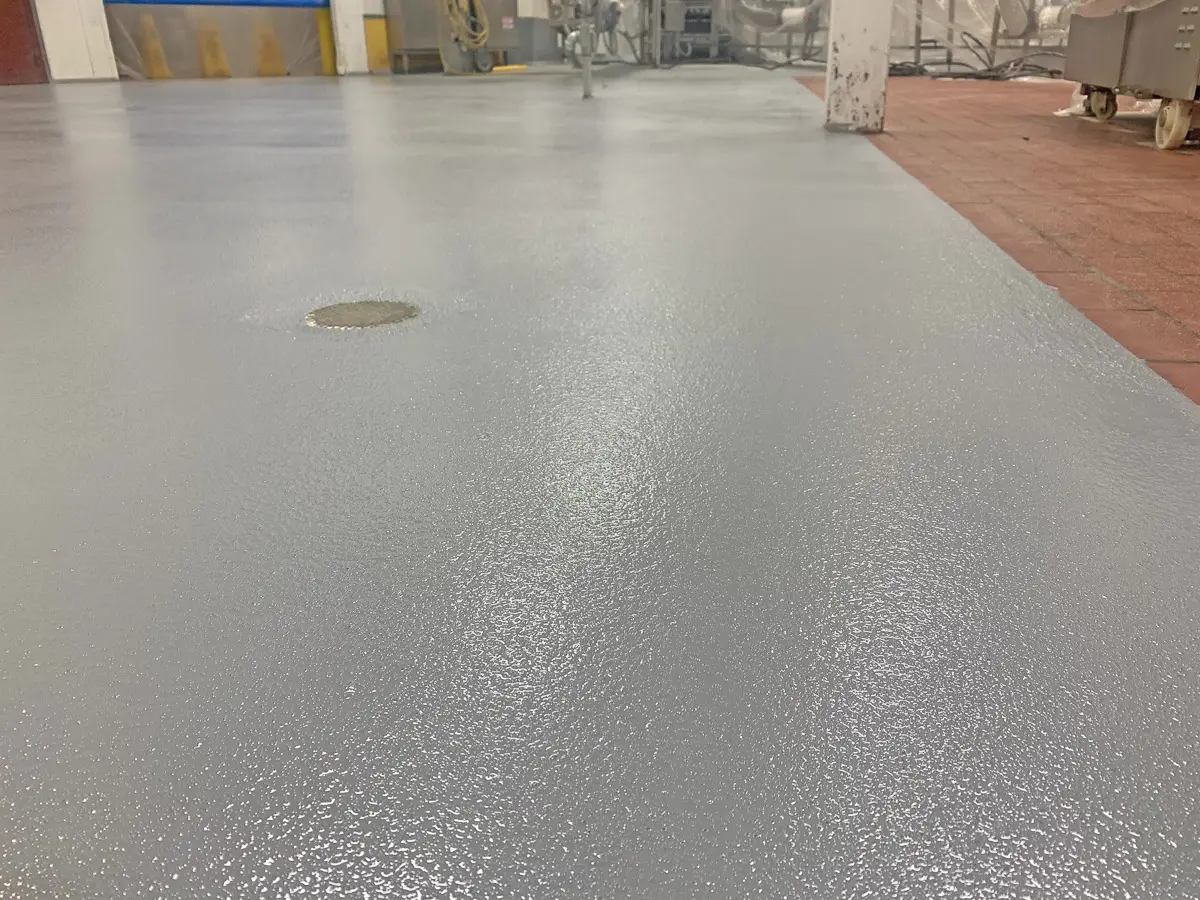
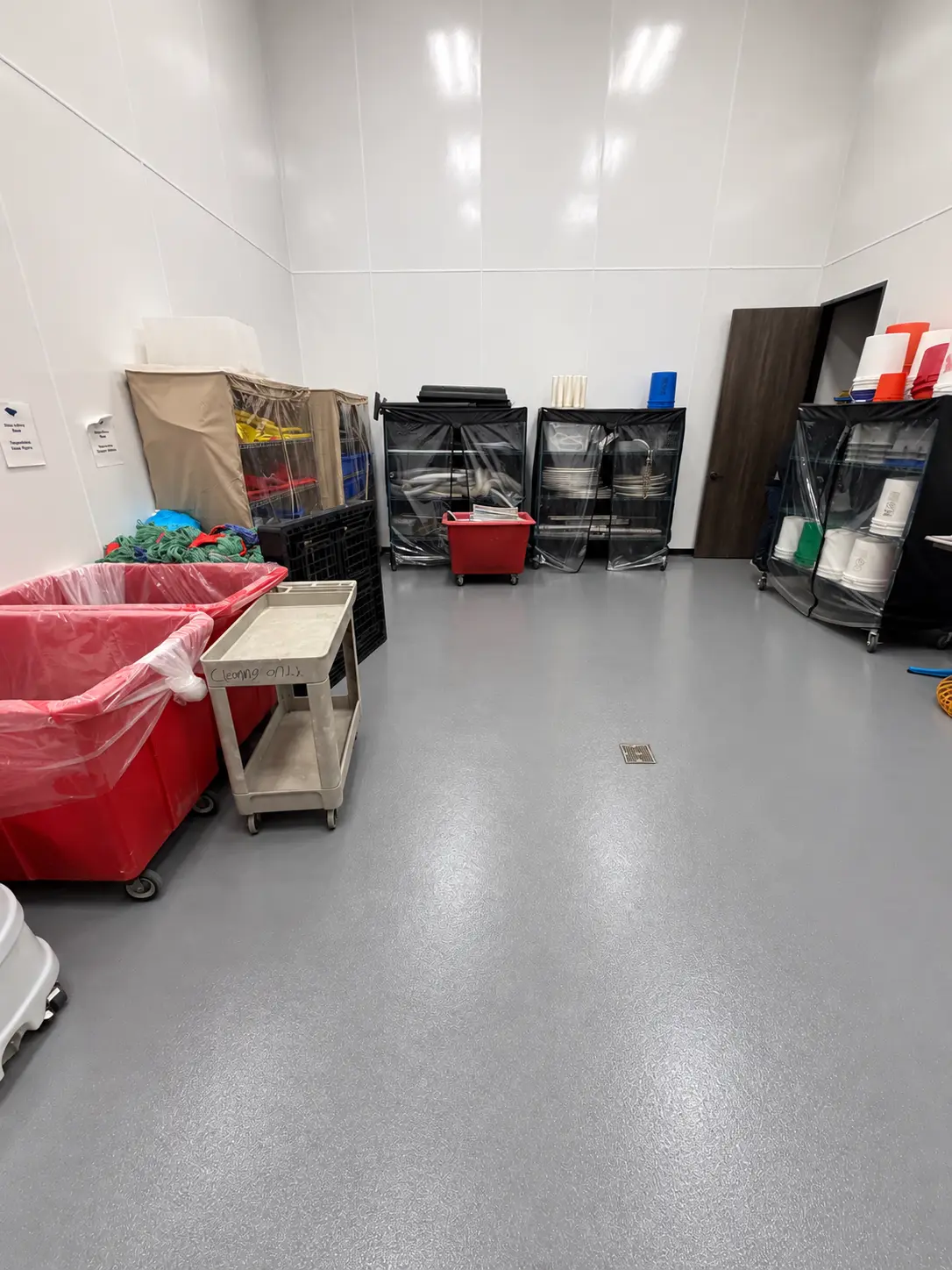
Urethane cement is a cement-based urethane mortar that bonds tightly to concrete and moves with it as temperatures swing. That is why it is the standard floor for commercial kitchens, food and beverage plants, washdown rooms and freezers.
It is thicker and tougher than a typical coating and handles damper slabs better than most epoxies. We grind the concrete, cut anchor grooves at edges, drains and doorways, and finish with a slip-resistant texture suited to your cleaning routine. Hybrid builds pair a urethane cement base with a different topcoat when the room calls for it.
Legacy Industrial Coatings installs commercial and industrial epoxy flooring, polished concrete and floor coatings from Plano, Texas, across Dallas–Fort Worth, all of Texas and nationwide. See our commercial and industrial epoxy flooring and polished concrete pages.
Serving Dallas, Fort Worth, Plano, Frisco, McKinney, Richardson, Carrollton, Lewisville and the rest of North Texas, plus Houston, Austin, San Antonio and projects across Texas and nationwide.
Why Kitchens and Plants Choose It
Handles thermal shock
Steam cleaning, hot washdown and freezer cycles do not crack or lift it the way they can with epoxy.
Resists kitchen and plant chemicals
Hot oils, animal fats, food acids and caustic cleaners do not soften the floor.
Slip-resistant texture
A textured finish keeps footing safe in wet areas and can be tuned to the space.
Moisture tolerant
It can go down on slabs with more moisture than most epoxy floors allow, often saving a mitigation step.
Seamless with cove
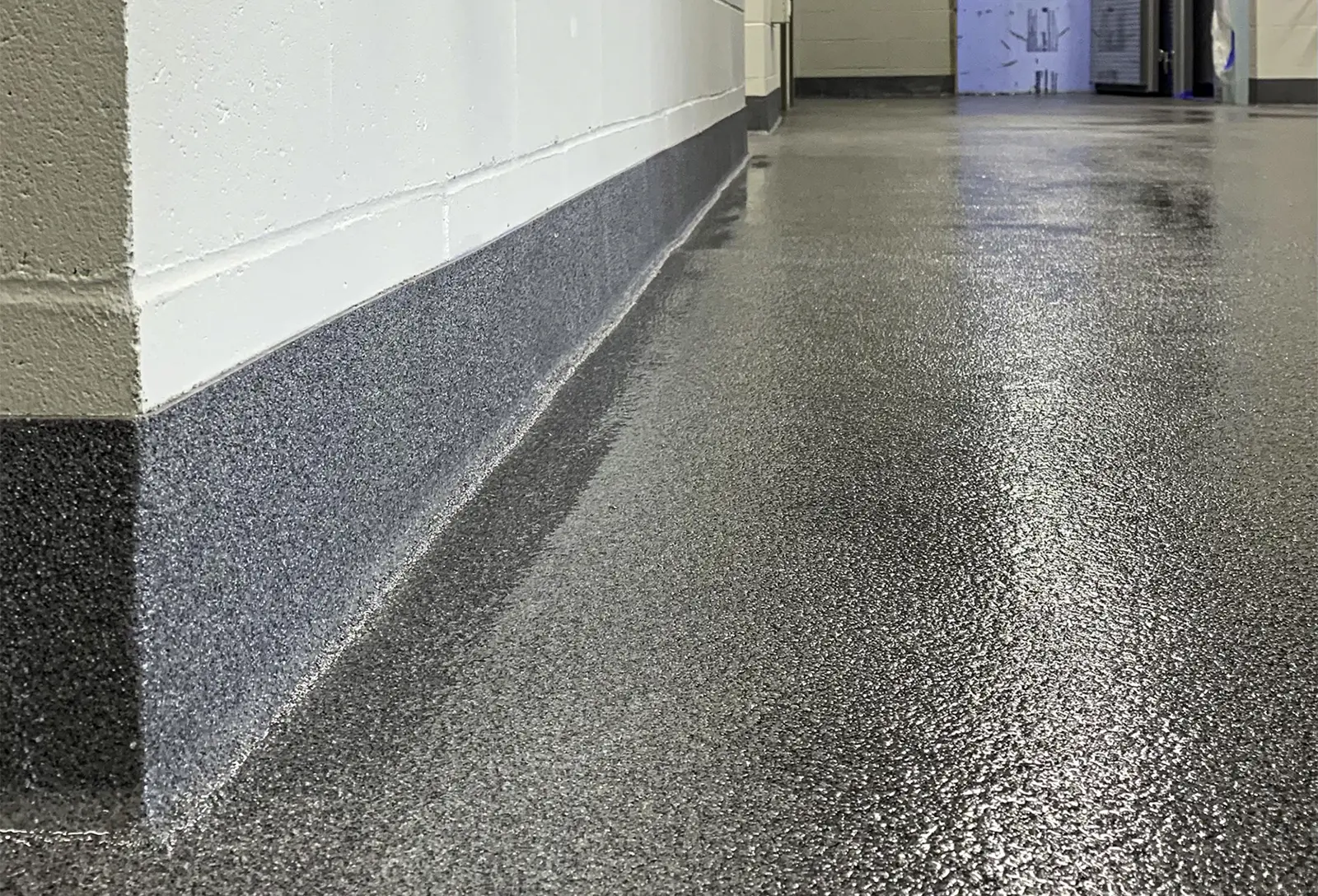
Matching integral cove carries the floor up the wall and around drains and equipment for easy sanitation.
FAQ
Urethane Cement Questions
How much does urethane cement flooring cost?
Urethane cement typically runs about $21 per square foot, and integral cove base about $15 per linear foot. Prep, drains, slopes and phasing around production confirm the final number.
Why urethane cement instead of epoxy in a kitchen or food plant?
Thermal shock. Epoxy is rigid, while urethane cement moves more like concrete, so steam cleaning, hot oil and washdowns do not crack or lift it. It is the standard choice for food and beverage processing and busy commercial kitchens.
Can it go over an existing floor?
Only after the old coating or tile is removed or fully prepped. We grind down to sound concrete, repair the slab and check adhesion before installing, because the bond is what keeps the floor in place for the long haul.
Is urethane cement suitable for food areas?
Yes. The systems we install are accepted for food and beverage environments and are the usual choice in processing plants and commercial kitchens. Integral cove and smooth transitions to drains help with sanitation.
How long will the kitchen be closed?
It depends on the size of the area and the prep. Foot traffic is typically possible overnight, and full chemical resistance builds over the following days. If you can only close for a night, we may suggest MMA instead.
Get a bid on your urethane cement project
Send plans or a scope. Site walk within 1–3 business days; full bid within 24 hours of receiving plans.
Request Information
Tell us about your project and we'll follow up within one business day.
Prefer to talk now? Call (214) 305-6516 or