Industrial Coatings
Novolac vs. Standard Epoxy: Which Do You Need?
By Legacy Industrial Coatings
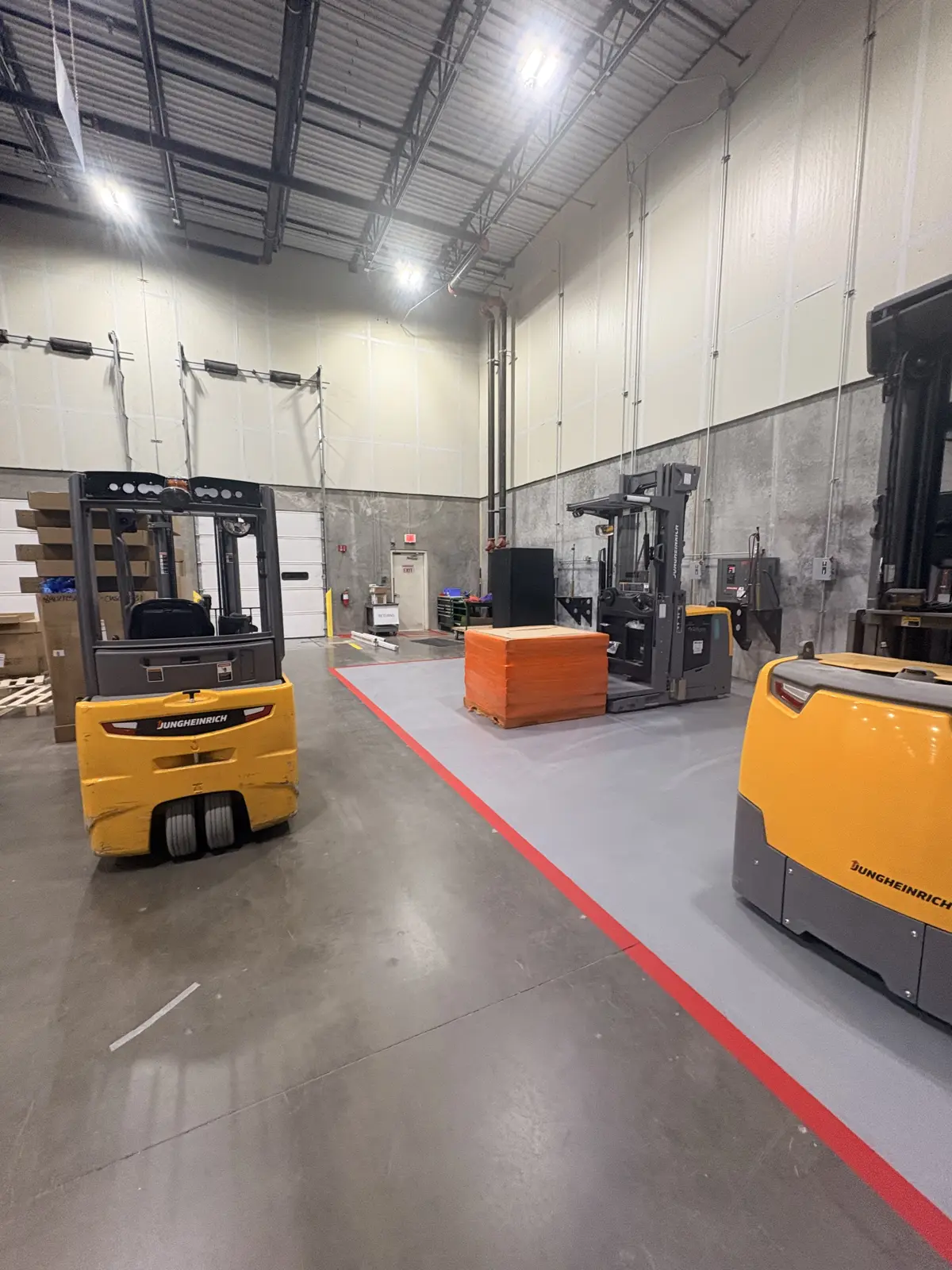
Most commercial and industrial floors only need standard epoxy. You need novolac epoxy when the floor will see concentrated acids, strong solvents or constant heat that standard epoxy cannot tolerate, which usually means battery charging rooms, chemical storage and secondary containment.
Novolac is not simply a "better" epoxy. It is a more chemical- and heat-resistant epoxy with its own tradeoffs, and using it where you do not need it adds cost without adding value. Here is how to tell which one your floor needs.
What Is the Difference?
Both are two-part epoxy resins that bond to prepared concrete and form a seamless, cleanable floor. Novolac epoxy is more tightly cross-linked. In plain terms, its structure is denser, so chemicals have a harder time getting into it and it keeps its strength at higher temperatures.
Standard epoxy handles the everyday conditions of most facilities well: forklift and foot traffic, oil, grease, cleaners, and occasional splashes of many common chemicals. Where it struggles is with strong acids, aggressive solvents and long contact times. Those can soften, stain or etch a standard epoxy floor. Novolac is built for those conditions.
When Standard Epoxy Is Enough
- Warehouses and distribution centers with forklift traffic
- General manufacturing and assembly floors
- Maintenance shops with oil, grease and occasional spills that get cleaned up promptly
- Commercial spaces, back-of-house areas and corridors
For these areas, a properly prepared industrial epoxy system with the right finish for the traffic is usually the best value.
When You Need Novolac
Battery charging rooms
Lead-acid batteries can leak or spill sulfuric acid during charging and watering. That acid attacks standard epoxy and bare concrete. Novolac floors, cove and curbs keep the acid on the surface where it can be cleaned up. See our battery room flooring page for more.
Chemical storage and process areas
Rooms where acids, caustics or solvents are stored, poured or mixed need a floor that can survive a spill sitting until someone finds it. The key is not just which chemicals are present, but how strong they are and how long they stay on the floor.
Secondary containment
Containment has to hold a spill long enough to clean it up. Secondary containment coatings often use novolac carried continuously across floors, curbs, walls and penetrations so there are no weak edges.
Constant heat
Novolac tolerates higher operating temperatures than standard epoxy, so it suits areas near ovens or other sources of steady heat.
The Tradeoffs of Novolac
- It costs more. If the chemicals do not require it, the extra cost buys you nothing.
- It is more rigid. That density makes it less forgiving of heavy impact and temperature swings than some other systems.
- It does not solve thermal shock. Hot water, steam cleaning and hot oil hitting a cool floor are a different problem. For those rooms, urethane cement is usually the right answer.
- It can change color. Like other epoxies, it can yellow with UV exposure and may discolor from some chemicals, even when it is still protecting the slab.
How to Decide
Start with a list of the chemicals the floor will actually see, their strength, and how long a spill might sit before it is cleaned up. We check that list against the manufacturer's chemical resistance data before recommending a system, not after a spill.
- Traffic, oil and routine cleaners only: standard epoxy.
- Battery acid, concentrated chemicals, strong solvents or containment: novolac epoxy.
- Hot washdown, steam or thermal shock: urethane cement.
Many buildings use more than one. A Dallas–Fort Worth warehouse might have standard epoxy in the aisles and novolac only in the battery charging room. Using novolac only where it is needed keeps the project cost in check. Learn more on our novolac epoxy flooring page.
Frequently Asked Questions
Is novolac epoxy better than regular epoxy?
It is better at resisting strong chemicals and heat. It is not better for every floor. For forklift traffic and routine cleaning, standard epoxy performs well and costs less.
Can novolac go up the walls and over curbs?
Yes. In battery rooms and containment areas, we carry the novolac up the cove, over curbs and around penetrations so the whole area is one continuous surface.
Do I need novolac for a battery charging area?
For lead-acid batteries, it is the common choice because of the risk of sulfuric acid spills. We confirm the battery type and charging setup before recommending the floor.
Can you coat just the chemical area with novolac?
Yes. We often install novolac in the battery room or chemical storage area and standard epoxy in the rest of the building, with clean transitions between them.
If you have a battery room, chemical storage area or containment to coat, request an estimate or send us your plans. Send your chemical list too, and we will match the floor to what it actually has to survive.