
Concrete Moisture Mitigation
Moisture in the slab is one of the top reasons new floors fail. We test first, then choose the right mitigation so your coating, vinyl or carpet stays bonded.
Why Test Concrete for Moisture Before a Floor Goes Down?
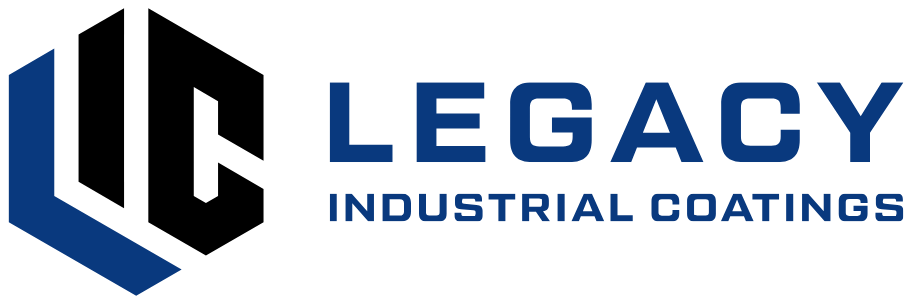
Concrete can hold and release moisture for years. That vapor pushes up against coatings and adhesives, causing bubbles, peeling and lifting tiles. Testing tells us what we are dealing with before any finish goes down.
When readings are high, there are options. Many epoxy, flake and quartz floors can go over a moisture-mitigating epoxy primer. Urethane cement tolerates damper slabs on its own. Other projects need a full vapor-barrier system matched to the patch, adhesive and finish.
Legacy Industrial Coatings installs commercial and industrial epoxy flooring, polished concrete and floor coatings from Plano, Texas, across Dallas–Fort Worth, all of Texas and nationwide. See our commercial and industrial epoxy flooring and polished concrete pages.
Serving Dallas, Fort Worth, Plano, Frisco, McKinney, Richardson, Carrollton, Lewisville and the rest of North Texas, plus Houston, Austin, San Antonio and projects across Texas and nationwide.
How We Handle Moisture
Test before choosing the floor
We test the slab and compare the results with what the new floor can handle.
Moisture-mitigating primers
A specialty epoxy primer under the floor holds back vapor so the coating stays bonded.
Full vapor-barrier systems
For high readings or resilient floors, we install a complete system matched to the adhesive and finish.
The right floor for a damp slab
Sometimes the smartest fix is a moisture-tolerant system like urethane cement.
Compatible top to bottom
Primer, patch, adhesive and finish are checked to work together, which protects the warranty.
Trusted By









And more — pharmaceutical manufacturers, GCs and property managers across DFW and nationwide.
FAQ
Concrete Moisture Mitigation Questions
Does every floor need moisture mitigation?
No. The test results, the slab history and the finish being installed decide it. Many slabs need nothing extra, some need a mitigating primer and a few need a full vapor-barrier system. Testing is how we know which.
Will an epoxy primer fix an active leak?
No. Mitigation handles vapor moving up through the slab, not water pouring in. Leaks, drainage problems and water pressure from below have to be found and fixed separately before we install.
Can mitigation go under carpet tile or LVT?
Yes, as long as the mitigation, patch, adhesive and flooring are approved to work together. We check that before ordering materials so the flooring manufacturer's warranty stays intact. If anything is not compatible, we flag it in the bid.
Why test moisture on a slab that looks dry?
Because the surface tells you very little. A slab can look and feel dry while vapor is still moving up from below. Testing before installation is far easier than tearing out a failed floor.
How much does moisture mitigation cost?
It depends on the test results, square footage, the finish going on top, coating or adhesive removal and whether a primer or a full vapor-barrier system is needed. We return a full bid within 24 hours of receiving plans, so send yours or request a site walk.
Get a bid on your concrete moisture mitigation project
Send plans or a scope. Site walk within 1–3 business days; full bid within 24 hours of receiving plans.
Request Information
Tell us about your project and we'll follow up within one business day.
Prefer to talk now? Call (214) 305-6516 or