
Best Garage Floor Coatings for Texas Heat: DFW Guide
By Legacy Industrial Coatings Team
If you've watched a garage floor coating bubble, yellow, or peel after one brutal Texas summer, you already know that not all systems are created equal. In the DFW Metroplex, where temperatures routinely hit 105°F and concrete surfaces can reach 150°F or higher, your garage floor faces conditions that would destroy coatings designed for milder climates.
At Legacy Industrial Coatings, we've installed hundreds of garage floors across Plano, Frisco, McKinney, and Prosper—and we've also repaired plenty of failed DIY jobs and bargain installations. Here's what actually works when Texas heat is your daily reality.
Why Standard Epoxy Fails in DFW Garages
Most big-box store epoxy kits contain water-based formulas with thin mil thickness—typically 2-3 mils when applied. These products weren't engineered for concrete that expands and contracts dramatically in our climate. When your garage slab heats up during a July afternoon and cools overnight, that movement creates stress the coating can't handle.
The result? Delamination usually appears within 6-12 months. You'll see it start at the edges or around cracks, then spread across the floor. The coating quite literally pulls away from the concrete because the bond wasn't strong enough to withstand thermal cycling.
Solvent-based epoxies perform significantly better. They penetrate deeper into the concrete substrate and create a mechanical bond that handles temperature swings. Professional-grade systems from manufacturers like Dur-A-Flex or Stonhard apply at 10-20 mils thick—five to ten times the protection of DIY products.
Polyaspartic Coatings: The Texas Heat Champion
While quality epoxy works well in DFW garages, polyaspartic coatings represent the premium standard for Texas conditions. These systems cure through a different chemical process that makes them inherently more flexible and UV-stable than epoxy.
The UV resistance matters more than most homeowners realize. Garages in neighborhoods like West Plano and Legacy West often have windows or doors that let in direct sunlight. Epoxy yellows and chalks under UV exposure—polyaspartic doesn't. We've seen polyaspartic installations in Prosper that still look showroom-fresh after five years of full sun exposure.
Temperature tolerance is another critical advantage. Polyaspartic systems remain flexible at temperature extremes, from below freezing (rare but it happens in North Texas) to above 160°F on the surface. That flexibility means the coating moves with your concrete instead of fighting it.
Fast Cure Time in High Heat
Here's a practical benefit: polyaspartic coatings cure in 4-8 hours even in summer heat, compared to 3-5 days for epoxy. For busy DFW families, that means you can park on your new floor the same day in most cases. The chemistry actually works faster in warm conditions—turning Texas heat from a liability into an advantage.
Flake Systems: Beauty Meets Durability
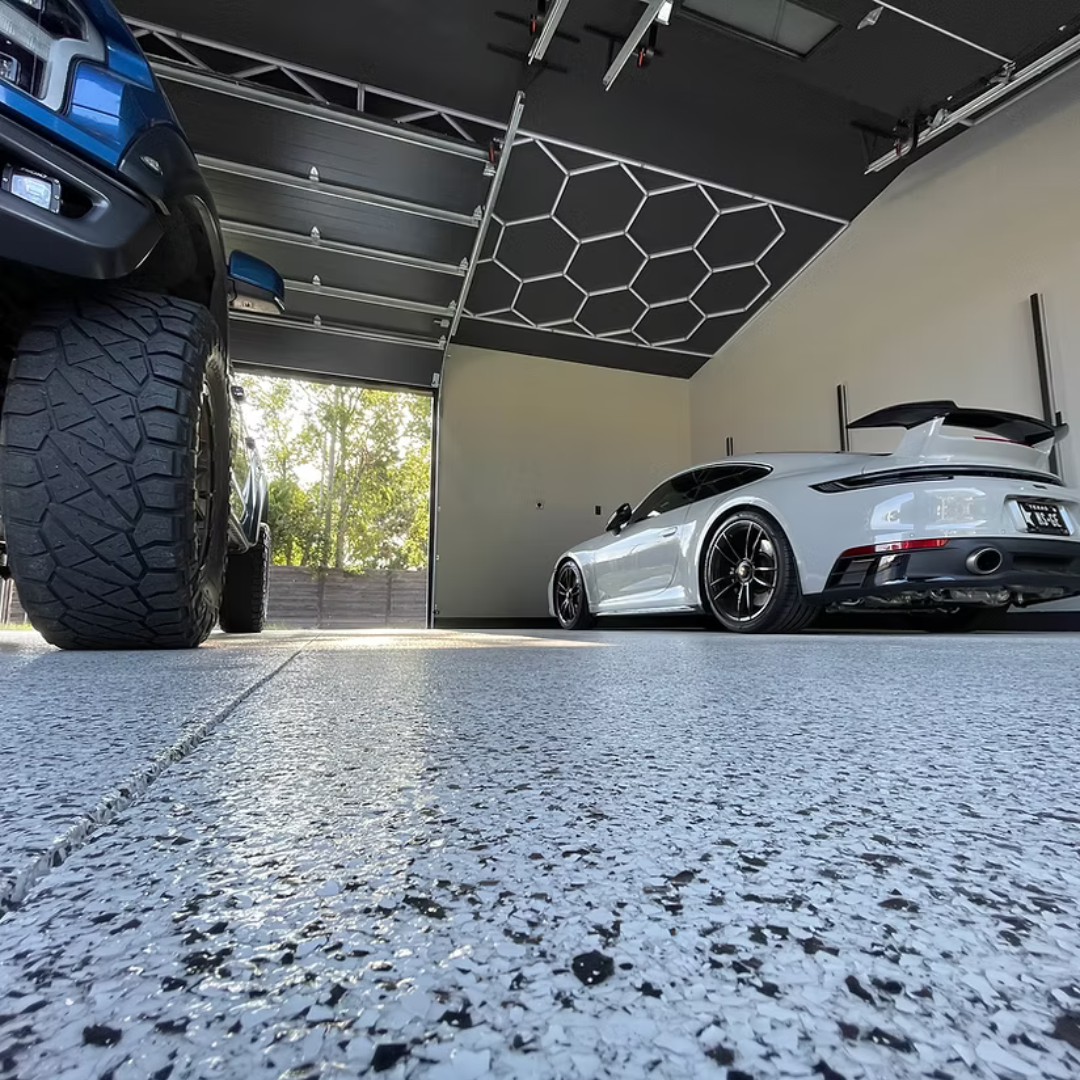
Decorative flake systems work with both epoxy and polyaspartic base coats, giving you nearly unlimited design options while adding functional benefits. The flakes—whether you choose subtle gray blends popular in Frisco or bolder colors common in McKinney man caves—actually improve traction and hide minor concrete imperfections.
Full-broadcast flake systems, where we apply flakes to complete saturation, create the most durable surface. The flakes become encapsulated in the topcoat, adding thickness and impact resistance. This approach works especially well in garages that see heavy use: dropped tools, rolling toolboxes, car jacks, and motorcycle kickstands.
The Moisture Question in DFW
Texas isn't just hot—our humidity creates another challenge for garage coatings. Concrete is porous and can transmit moisture vapor from the ground below. In newer construction across Allen and Little Elm, we often find slabs without proper vapor barriers that were poured directly on grade.
Professional installers perform moisture vapor emission tests before coating. If your slab tests above 3-5 pounds per 1,000 square feet per 24 hours, you need moisture mitigation—either a specialized primer or a moisture-tolerant system. Skip this step and you'll see blistering within weeks, especially during our humid spring and fall seasons.
What to Ask Your DFW Coating Contractor
Before hiring anyone to coat your garage floor in the DFW area, get specific answers to these questions:
- What mil thickness will the final system be? (Look for 10+ mils minimum)
- Do they perform moisture testing? (Required for any professional job)
- What's the concrete surface preparation method? (Diamond grinding or shot blasting, never just acid etching)
- What's the warranty coverage and duration? (Quality systems should carry 5-10 year warranties)
- Do they have local references in your city? (Drive by and look at real installations)
Investment Reality for DFW Homeowners
Professional polyaspartic garage systems in the Plano area typically run $7-12 per square foot installed, depending on floor condition and design complexity. Quality epoxy systems range from $5-9 per square foot. Yes, you'll find cheaper options—and you'll likely be recoating in two years.
A 400-square-foot two-car garage represents a $2,000-$4,800 investment for a system that will genuinely last 10-15 years in Texas conditions. Compare that to replacing the coating every 2-3 years, and the math becomes clear.
Texas heat doesn't have to be your garage floor's enemy. With the right coating system, proper installation, and professional-grade materials designed for thermal stress, your garage can look exceptional and perform flawlessly through decades of DFW summers. The difference isn't just in the product—it's in understanding how concrete and coatings behave in our specific climate.
Ready to transform your floors?
Talk to our team and get a clear plan for your space.