Restaurants & Commercial Kitchens Flooring
Kitchen floors that handle hot oil, boiling water and daily washdown and help you pass inspection, installed overnight so you keep serving.
What Is the Best Flooring for a Restaurant Kitchen?
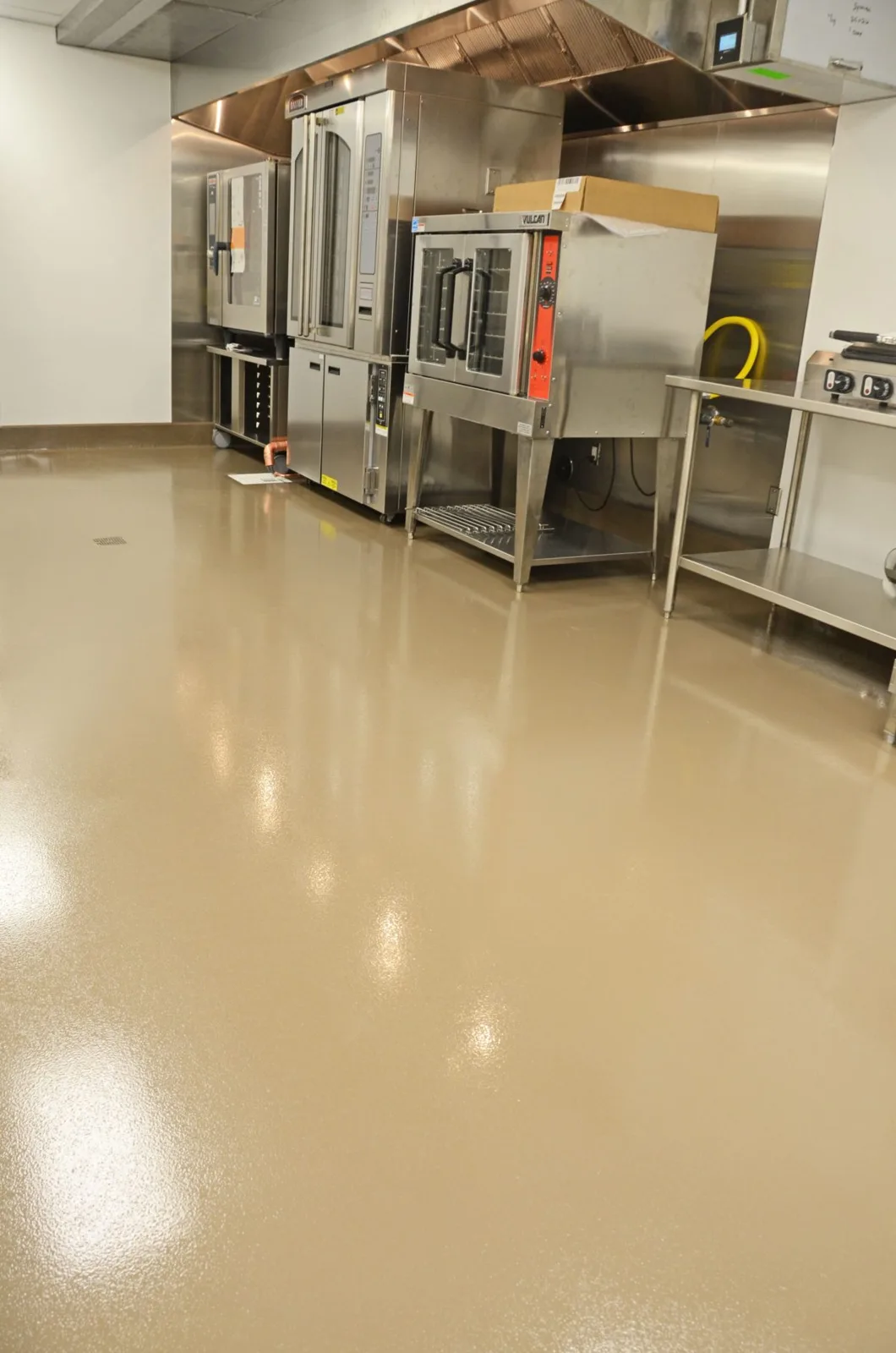
Kitchen floors fail at the edges first: around drains, at the wall base and under fryers, where hot oil and water break down weaker floors. Urethane cement is built for those conditions and holds up to thermal shock (fast changes from hot to cold).
We fix the problems under worn floors, including contaminated concrete, failing wall bases and broken drain edges, then install a floor that lasts. We work overnight and in phases, and we can run a repeatable scope for multi-location restaurant groups.
Legacy Industrial Coatings installs commercial and industrial epoxy flooring, polished concrete and floor coatings from Plano, Texas, across Dallas–Fort Worth, all of Texas and nationwide. See our commercial and industrial epoxy flooring and polished concrete pages.
Serving Dallas, Fort Worth, Plano, Frisco, McKinney, Richardson, Carrollton, Lewisville and the rest of North Texas, plus Houston, Austin, San Antonio and projects across Texas and nationwide.
Floors We Install Here
Where We Work in a Restaurant
Cook lines and fryers
Urethane cement with a chemical-resistant topcoat that stands up to hot oil and heat.
Dish and prep areas
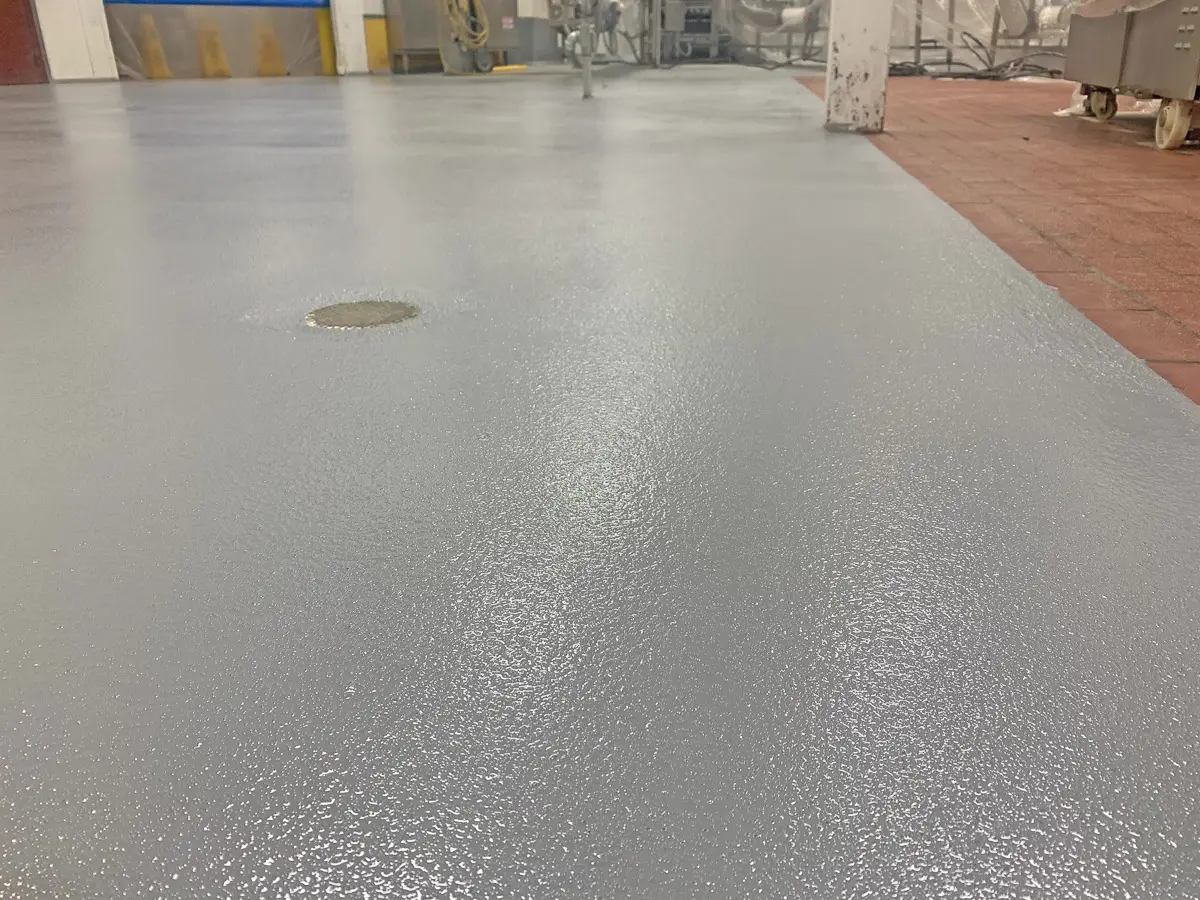
Wet-service urethane cement with a slip-resistant texture and clean drain details.
Decorative kitchen floors
Urethane cement with color flake for a kitchen floor that looks finished and still handles heat and washdown.
Wall bases
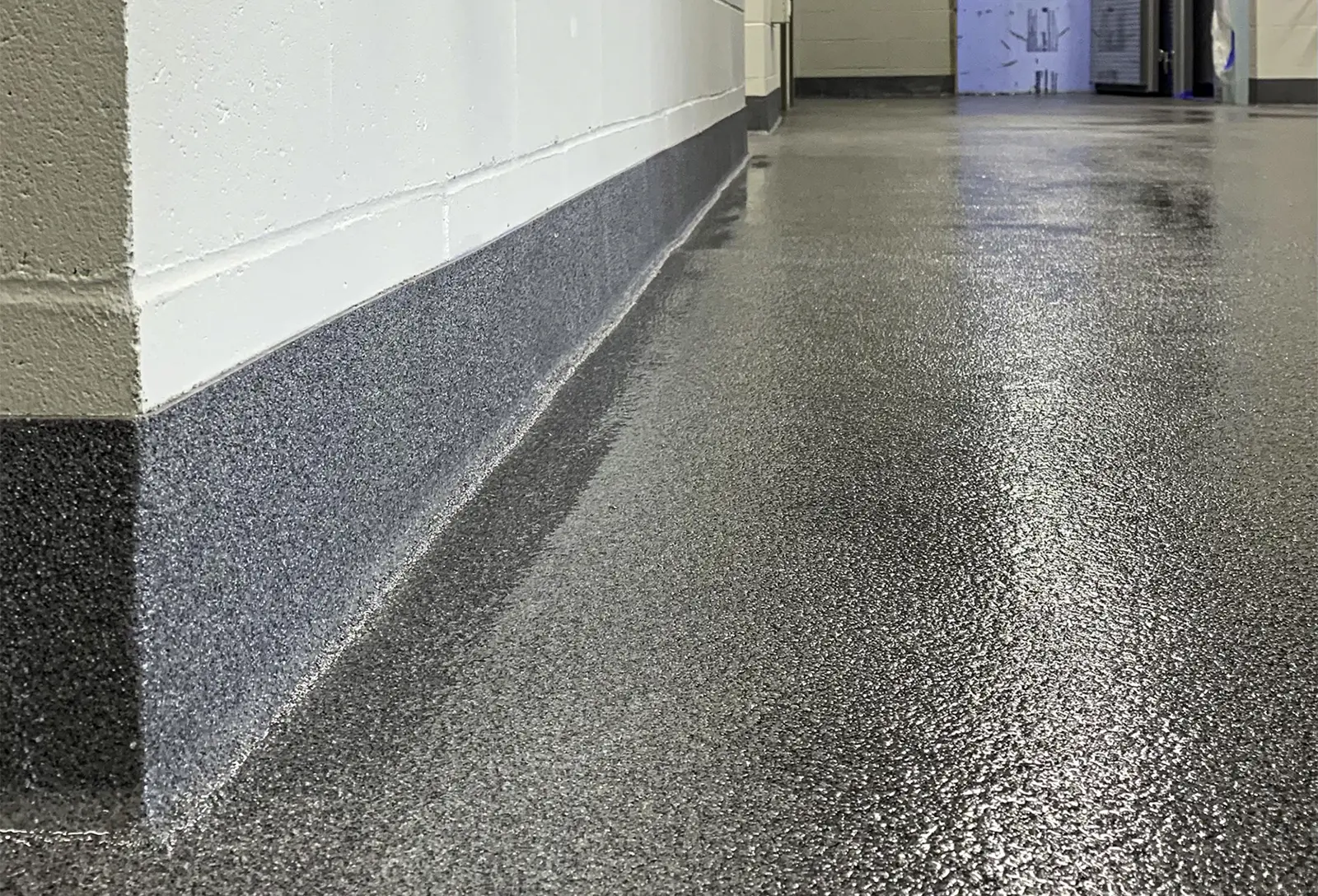
Integral cove base that seals the floor-to-wall joint and removes a common inspection problem.
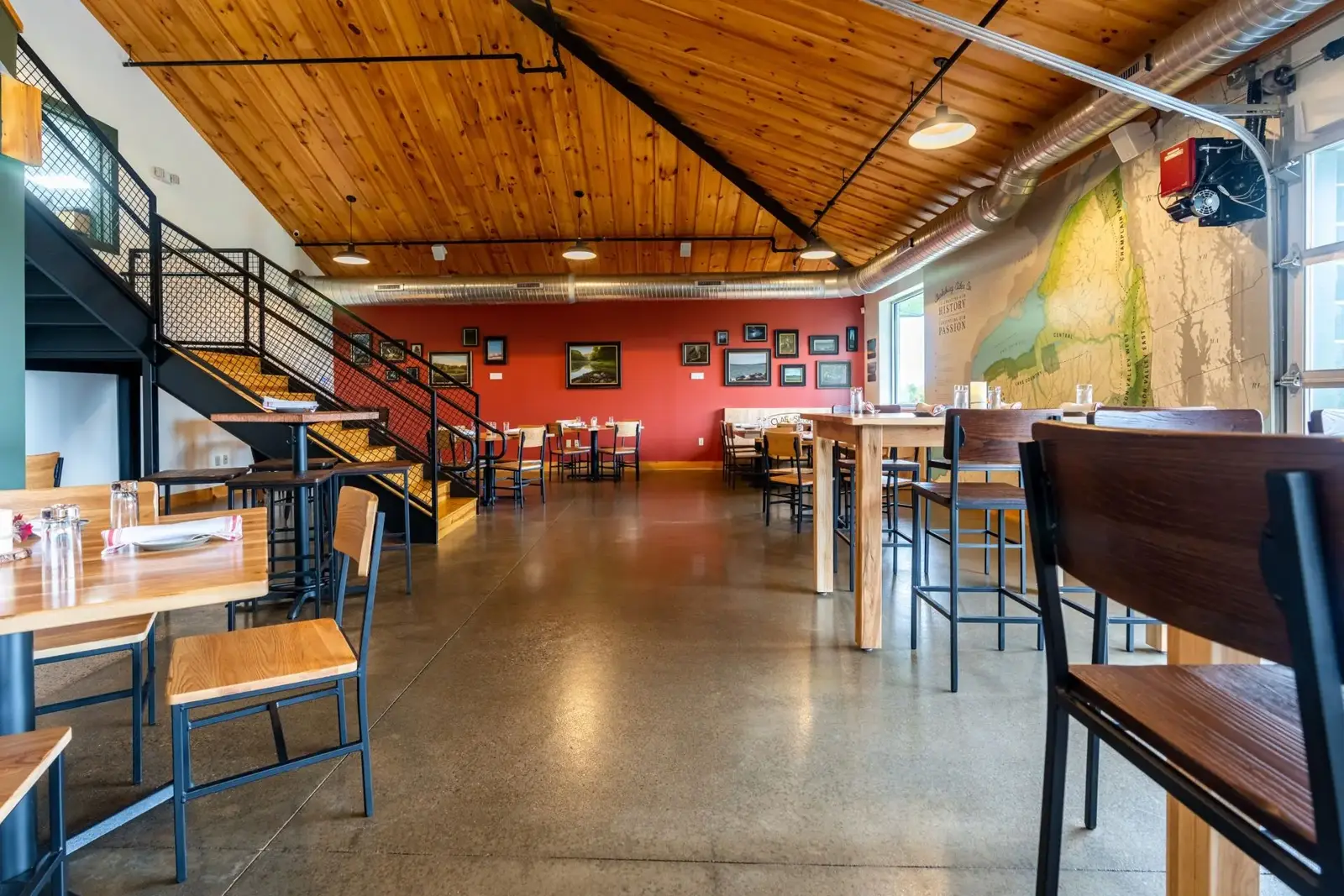
Dining rooms
Sealed or polished concrete for durable, easy-care front-of-house floors.
Multi-location programs
A consistent scope adapted to each store's slab and installed overnight.
Our Work
Recent Projects
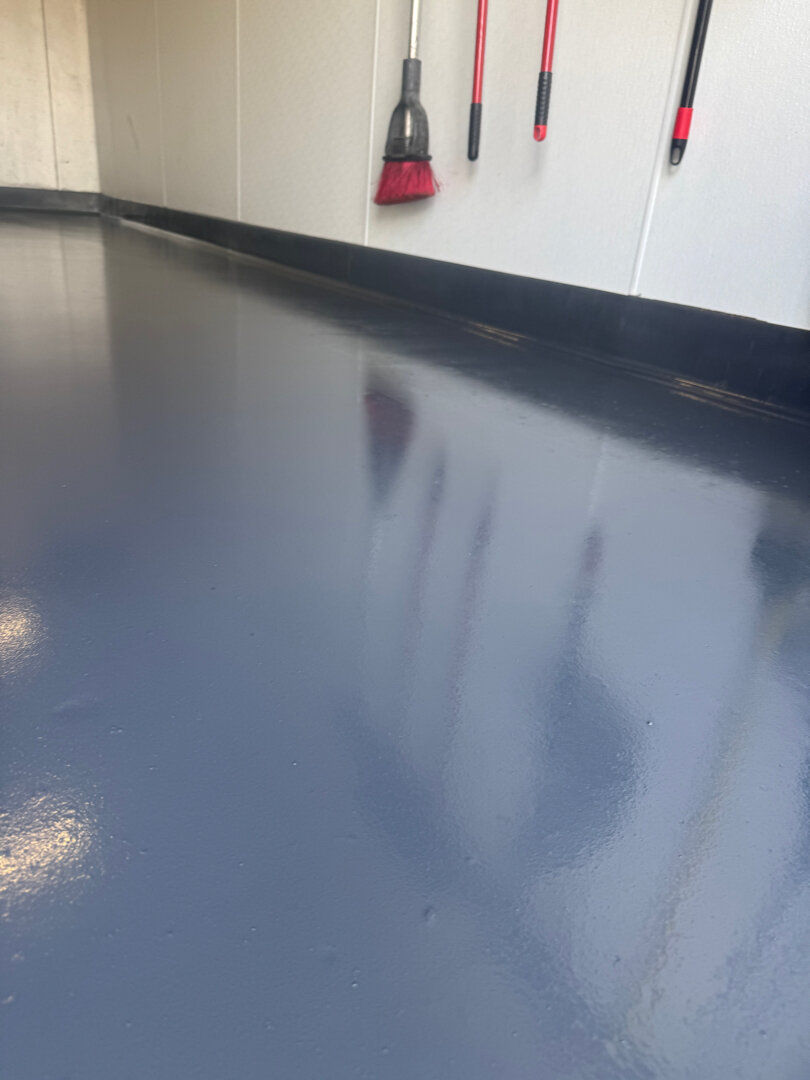
Restaurant Pump Room · DFW, TX
Restaurant Pump Room — Health Inspection Failure to Integrated Cove Base Build
A local restaurant failed its health inspection because the pump room behind the kitchen had no integrated cove base — the floor met the wall in an open seam, letting wash water run straight into the sheetrock. We tore out the failing floor, built a true integrated cove base up the wall, and coated the entire room — floor and cove — in a single seamless epoxy system that passes inspection and stays watertight.
Read the case study
Fast-Casual Restaurant · Plano, TX
Fast-Casual Restaurant — 8-Year-Old Sealant Restoration
An open dining room with a sealant that hadn't been touched since opening day eight years ago. Stained, dusting, and absorbing every spill. We deep-cleaned, restored, and resealed the slab in a single overnight visit.
Read the case studyTrusted By









And more — pharmaceutical manufacturers, GCs and property managers across DFW and nationwide.
FAQ
Restaurants & Commercial Kitchens Flooring Questions
How much does commercial kitchen flooring cost?
Urethane cement typically runs about $21 per square foot and quartz about $15 per square foot, with integral cove base about $15 per linear foot. Kitchen size, drains and after-hours scheduling confirm the final number.
Why urethane cement instead of epoxy?
Epoxy can crack and lose its bond under hot water and oil. Urethane cement is made for it, which is why it is the standard choice behind the line. Dining rooms and dry storage can often use sealed concrete or epoxy instead.
Can you install without closing the restaurant?
Many jobs are done overnight or across a few nights in phases. Some kitchens close for a short window so the floor can cure, and we plan that with you upfront.
Will a new floor help us pass inspection?
A seamless floor with cove base removes the cracks and gaps inspectors flag and makes cleaning easier. We focus on the details inspectors look at most: drains, wall bases and transitions.
Get a bid on your restaurants & commercial kitchens floor
Send plans or a scope. Site walk within 1–3 business days; full bid within 24 hours of receiving plans.
Request Information
Tell us about your project and we'll follow up within one business day.
Prefer to talk now? Call (214) 305-6516 or