
Commercial Flooring
What Is the Best Flooring for a Commercial Kitchen?
By Legacy Industrial Coatings
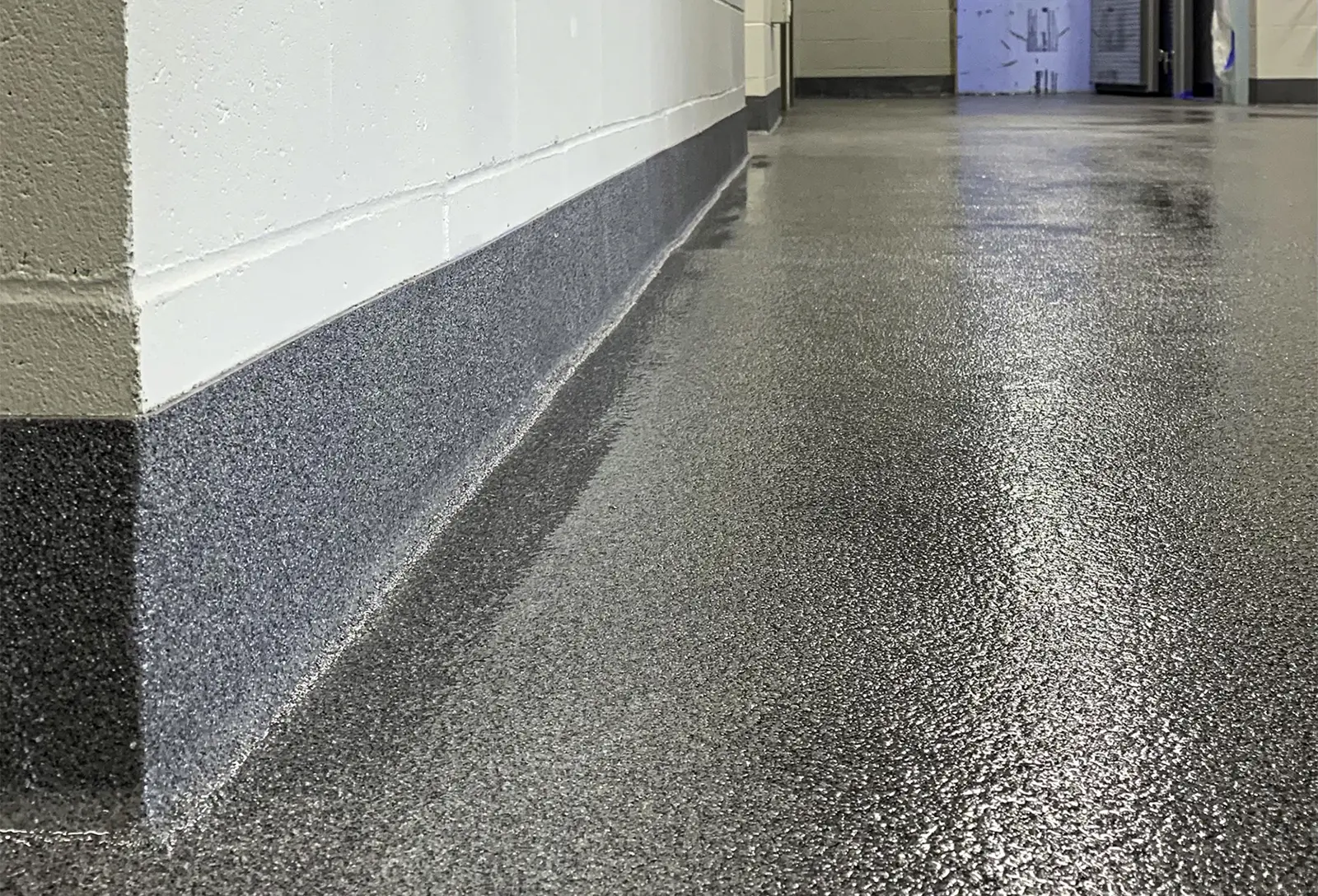
Urethane cement is the best flooring for most commercial kitchens. It stands up to hot oil, boiling water, steam cleaning and the fast temperature swings of a busy kitchen, and it installs as a seamless, slip-resistant floor with integral cove base that is easy to clean and helps you pass inspection. Dining rooms, dry storage and offices can often use simpler floors like sealed concrete or epoxy.
Why kitchen floors fail
Kitchen floors usually fail at the edges first: around floor drains, at the wall base and under fryers and kettles. Hot oil, hot water, food acids and harsh cleaners attack those spots every day. Once water gets under a floor or into a cracked wall base, it carries grease and bacteria into places you cannot clean, and that is what inspectors notice.
Common kitchen floors each have weak points. Tile floors depend on grout lines that wear, crack and hold grime. Vinyl and VCT are not made for standing water or heat. Standard epoxy is rigid and can crack or lose its bond under repeated hot washdowns. A seamless floor built for heat removes those weak points.
What changes the answer
Cook line and fryers
This is the hardest-working part of the kitchen. Urethane cement is the standard here because it handles thermal shock and resists hot oils and fats.
Dish and prep areas
These areas stay wet. They need a slip-resistant texture, good slope to drains and clean drain details so water does not get under the floor.
Walk-in coolers and freezers
Cold rooms see constant temperature cycling at the door. Urethane cement handles those swings better than rigid coatings.
Restrooms and corridors
A quartz floor is a durable, sanitary option for restrooms, corridors and busy back-of-house hallways that get cleaned often.
Dining rooms
Front-of-house floors need to look good and clean easily, but they do not face the heat of the line. Sealed or polished concrete is a durable, easy-care choice. See our fast-casual restaurant concrete sealing project for an example.
Downtime
Most restaurants cannot close for long. Many kitchen floors are installed overnight or across a few nights in phases. Some kitchens close for a short window so the floor can cure, and that should be planned upfront.
Do not skip the cove base
The joint where the floor meets the wall is one of the most common health inspection problems in a kitchen. Loose or cracked tile base and gaps behind equipment trap water and debris. Integral cove base carries the floor up the wall in one seamless piece, so the edges clean as easily as the middle. On one restaurant pump room that failed a health inspection, an integral epoxy cove base was the fix.
What we recommend
- Behind the line, dish and prep areas: urethane cement with a slip-resistant texture and integral cove base.
- Coolers and freezers: urethane cement for its tolerance of temperature swings.
- Restrooms and corridors: quartz or urethane cement, depending on how wet the space stays.
- Dining rooms: sealed or polished concrete.
- Dry storage and offices: epoxy or sealed concrete.
Before any new floor goes in, fix what is underneath. Worn kitchens often have grease-contaminated concrete, failing wall bases and broken drain edges that need to be addressed first. For restaurant groups across Dallas–Fort Worth and Texas, a consistent scope that adapts to each store's slab keeps results predictable. Our restaurant kitchen flooring page covers how we plan those projects.
Frequently asked questions
Is epoxy good for a commercial kitchen floor?
Epoxy works in dry areas of a restaurant, but behind the cook line and in dish areas, hot water and oil can crack it or break its bond. Urethane cement is made for those conditions.
Will a new kitchen floor help us pass health inspection?
A seamless floor with cove base removes the cracks, grout lines and gaps inspectors flag and makes cleaning easier. Drains, wall bases and transitions are the details that matter most.
Is quarry tile a good choice?
Tile can work, but grout lines wear, crack and hold grime over time, and broken tiles and loose base are common inspection issues. A seamless resin floor avoids those problems.
Can you install without closing the restaurant?
Many jobs are done overnight or across a few nights in phases. If the kitchen needs to close briefly for the floor to cure, we plan that with you before work begins.
Planning a new kitchen or fixing a failing floor? Request an estimate or send us your plans, and we will recommend the right floor for every area of your restaurant.