
Commercial Flooring
How Long Does Commercial Epoxy Installation Take?
By Legacy Industrial Coatings
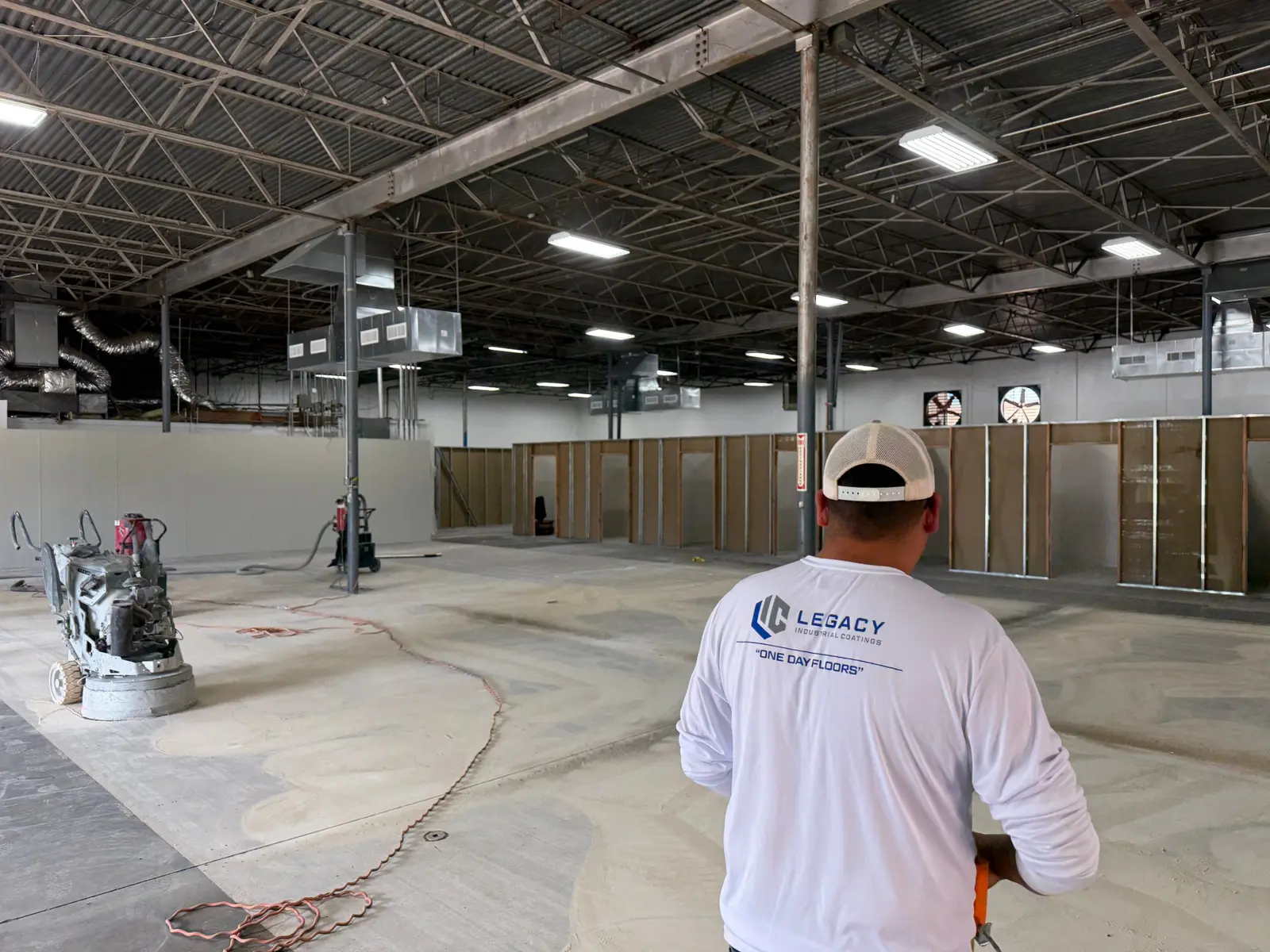
A commercial epoxy installation can take anywhere from a few days for a single room to a few weeks for a large building, and most of that time goes into slab prep and cure windows, not rolling out resin. The size of the floor, the condition of the concrete, moisture in the slab and how much of the building you can give up at once set the real schedule.
As a real example, on a 40,000 SF distribution center in Plano, our epoxy walkways and line striping took about two weeks. Your timeline will depend on the conditions below.
The Phases of a Commercial Epoxy Project
1. Site walk
We walk the floor, look at traffic, chemicals, existing coatings, cracks and joints, and talk through when you can give us access. This is where the schedule really starts, because it tells us how much prep and repair the floor needs.
2. Moisture testing
Moisture coming up through the slab is one of the most common reasons epoxy floors fail. We test before we commit to a system. If readings are high, the project may need a moisture mitigation step, which adds time but protects the whole floor.
3. Surface prep and grinding
The concrete is diamond ground to open the surface so the epoxy can bond. Old coatings, adhesives and contamination come off here. Prep is often the longest part of the job, especially when removing an old failed coating.
4. Repairs
Cracks, spalls and open joints are repaired before the coating goes down. A floor with a lot of damage takes longer. Joint filling and crack repair is usually scheduled into the same project.
5. Coating with cure windows
Epoxy goes down in layers, and each layer needs time to cure before the next one goes on. Those cure windows are set by the material and the conditions in the building. They are the part of the schedule you cannot rush without risking the floor.
6. Return to service
After the final coat, the floor needs time before it takes foot traffic, then more time before forklifts, carts and equipment go back on it. Full chemical resistance takes longer still. We confirm return-to-service times for your system before we schedule.
What Speeds Up or Slows Down the Schedule
- Size and layout. Bigger floors take longer, but open floors go faster per square foot than many small rooms with lots of edges, cove and doorways.
- Moisture. High moisture readings may add a mitigation step before the coating.
- Repairs. Heavy cracking, spalled joints or a failed coating that has to come off all add time.
- Temperature. Cold slabs and cold air slow cure times. Very hot conditions shorten working time. Climate control in the building helps keep the schedule predictable.
- Phasing. Working zone by zone keeps your operation running but stretches the calendar compared with getting the whole floor at once.
- After-hours work. Nights and weekends protect your operation but give us fewer working hours per day.
- Fast-cure systems. When downtime is measured in hours, MMA flooring can go back into service the same day, and polyaspartic finishes can shorten return-to-service times. They are not right for every floor, but they change the math when the schedule is tight.
What We Recommend
Start with the downtime you can actually give, then work backward. If you can close an area for a week, a standard epoxy system with proper cure windows is usually the best value. If you can only close overnight or for a weekend, we look at fast-cure systems or phase the work into smaller zones.
Get moisture tested early, especially on newer slabs or slabs on grade without a good vapor barrier, so there are no surprises after the schedule is set. And let us know about any hard dates, like a move-in, an inspection or a production start, at the site walk. For more on the systems we install, see our commercial flooring overview and the Plano distribution center case study.
Frequently Asked Questions
Can you install epoxy while the building stays open?
Usually, yes. We phase the floor zone by zone and work nights and weekends so shipping, production or customers keep moving. That is how we handle most occupied buildings in Dallas–Fort Worth.
When can we walk and drive on the new floor?
Foot traffic comes first, then lighter carts, then forklifts and heavy equipment. The exact times depend on the system and the temperature, and we confirm them before scheduling.
Why does prep take so long?
Because it decides how long the floor lasts. Grinding, removing old coatings and repairing the slab is what keeps the new epoxy bonded. Skipping or rushing prep is the most common cause of early failures.
What is the fastest option if we can only close for a night?
MMA is the usual answer for same-day return to service. In some areas, a polyaspartic finish can also shorten the shutdown. We will tell you if your floor is a good fit for either.
If you have a floor and a deadline, request an estimate or send us your plans. We will walk the site, test the slab and give you a schedule built around the downtime you can actually give.