Concrete Polishing
How Much Does Polished Concrete Cost Per Square Foot?
By Legacy Industrial Coatings
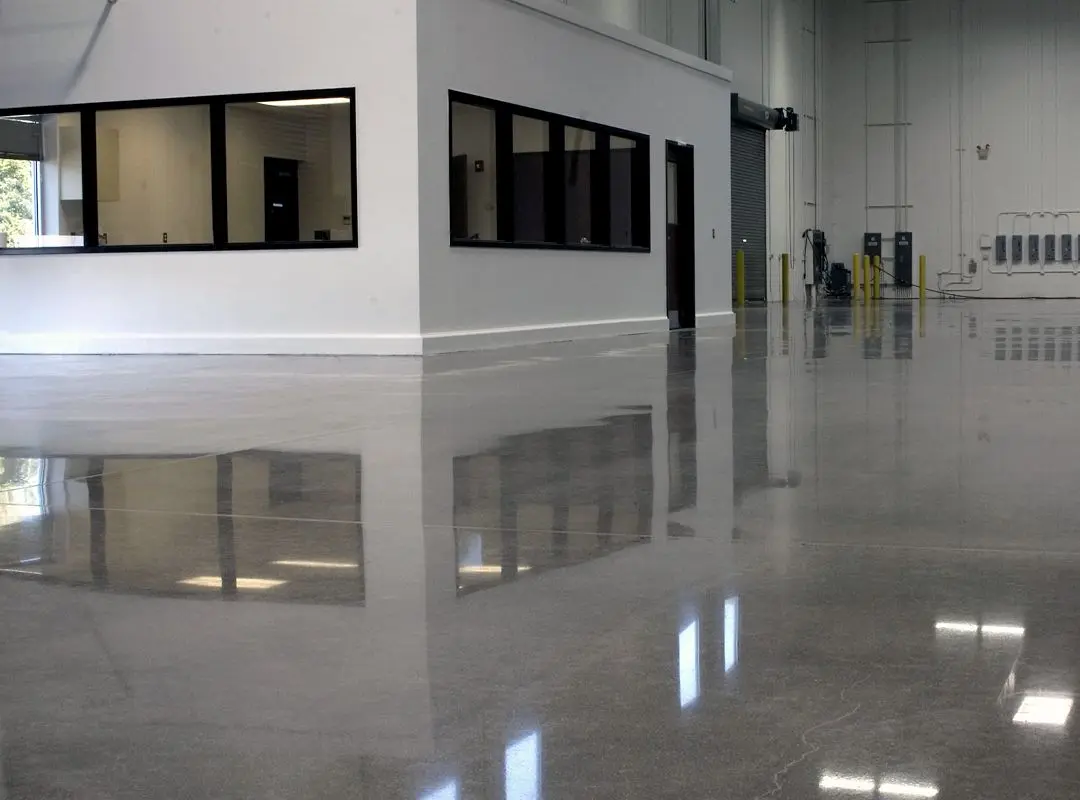
Commercial polished concrete typically costs about $2.25 per square foot on large floors up to about $8 per square foot on small ones. Within that range, the cost depends mostly on the condition of your slab and the finish you want. Removing old coatings or adhesives, repairing cracks and joints, how much stone you want exposed, how high a shine you want and whether the work runs after hours all change the price. Because the floor is your existing concrete, the slab itself is the biggest variable, which is why an accurate number starts with seeing it.
Typical price ranges
These are our typical ranges for commercial and industrial floors. They are a starting point for budgeting, not a bid:
- High-traffic epoxy: about $3.50 to $10 per square foot, driven mostly by job size
- Polished concrete: about $2.25 to $8 per square foot, driven mostly by job size
- Flake floors: about $7.50 to $9 per square foot
- Quartz flooring: about $15 per square foot
- Urethane cement: about $21 per square foot
- Integral cove base: about $15 per linear foot
Why polished concrete prices vary
Polished concrete is your slab, ground with progressively finer diamond tooling, hardened with a densifier and polished to the sheen you choose. There is no coating to buy in bulk, so most of the cost is time on the floor. Anything that adds grinding passes, repairs or working hours adds cost. A flat, clean, open slab is the most efficient job. An older floor covered in glue, paint and patches is a different project.
What drives the cost of polished concrete
- Existing coatings and adhesives. Paint, epoxy, sealers, carpet glue and tile mastic all have to come off before polishing can start. Removal is often the single biggest swing in price.
- Slab condition. Soft, uneven or heavily worn concrete takes more grinding to flatten and refine. Older slabs may also have patches that polish differently than the rest of the floor.
- Crack and joint repair. Cracks and spalled joints are usually filled before polishing so the floor is serviceable under carts and forklifts. Our joint filling and crack repair page explains the options.
- How much aggregate shows. A cream finish keeps grinding near the surface. Salt-and-pepper and full exposed aggregate take deeper grinding to reveal the stone, which means more time.
- Sheen level. A higher gloss takes more polishing steps than a satin or matte look.
- Dyes, guards and extras. Color dyes, stain guards and decorative cuts add steps to the scope.
- Square footage and layout. Large open floors move efficiently. Small rooms, tight edges, columns and racking legs slow the work down.
- Occupied buildings and scheduling. Dust-controlled grinding in an operating store, warehouse or office, along with night, weekend and phased work, adds coordination.
- Travel. Projects outside Dallas–Fort Worth carry travel and equipment transport costs.
Why lowball polishing bids fall short
The most common shortcut in polishing is skipping grinding steps. A floor that is rushed through the diamond sequence may look shiny on day one but will have visible scratch patterns, a hazy finish and a sheen that fades quickly under traffic. Another shortcut is leaving joints and cracks open, which lets edges chip under wheels. Some low bids are really a grind-and-seal, which is a different and lighter product than a true polish.
When comparing bids, ask each bidder what finish level, aggregate exposure and sheen they are pricing, how they handle joints and whether they are removing existing coatings. If those answers are not the same, the prices are not comparable.
How to get an accurate number
- Share plans or square footage by area
- Tell us what is on the floor today: bare concrete, paint, coatings, carpet or tile
- Describe the look you want, or send a photo of a floor you like
- Note how the space is used and when it can be closed
Because every slab polishes differently, we start with a mockup on your concrete. You see the actual aggregate exposure and sheen before the full floor is polished, which keeps the scope and the price honest.
What we recommend
If you have a sound slab in a dry space, polished concrete is one of the most durable, low-maintenance floors you can put in, and there is no coating to peel or wear through. If the slab is heavily damaged, the area stays wet or you need chemical resistance, a coating may serve you better. If you want a lighter scope for a dining room or sales floor, concrete sealing is worth comparing, like the work on our fast-casual restaurant sealing project. For a look at polishing at scale, see our 21,000 SF pharmaceutical plant polished concrete project, and read more on our concrete polishing page.
Frequently asked questions
Is polished concrete cheaper than epoxy?
It can be, especially on a sound slab with nothing to remove. If the slab needs heavy repair or the space needs color, safety zones or chemical resistance, epoxy may be the better value. Long-term maintenance matters as much as the install.
Does slab moisture affect polished concrete cost?
Usually less than it affects a coating. Because there is no coating that has to bond to the surface, moisture is rarely the cost driver for polishing that it can be for epoxy.
Can every slab be polished?
Many can, but results depend on the concrete. Old repairs, contamination and soft spots will show in the finished floor. A mockup sets expectations before the work starts.
What does polished concrete cost to maintain?
Very little compared with waxed or coated floors. Dust mopping, auto-scrubbing with a neutral cleaner and burnishing busy areas from time to time keeps it looking good.
Want a real number for your floor? Send us your plans or request an estimate. We return a full bid within 24 hours of receiving plans and serve projects across Texas and nationwide.