
Concrete Polishing
Sealed vs. Polished Concrete: What's the Difference?
By Legacy Industrial Coatings
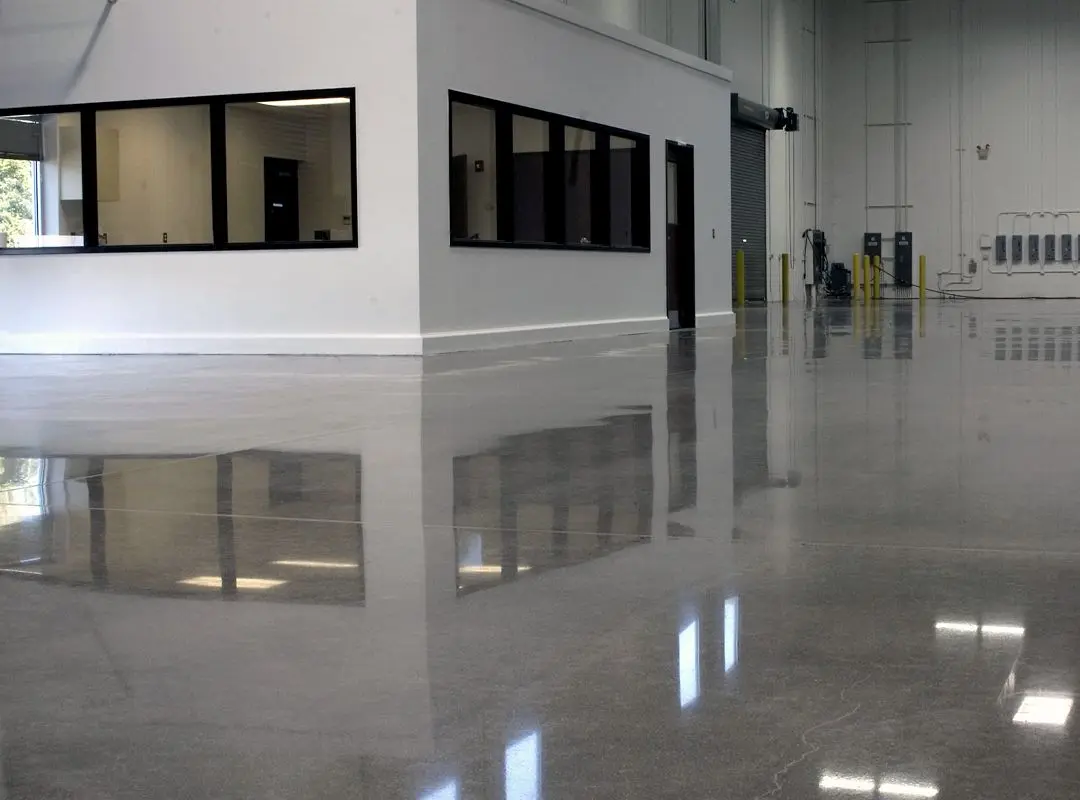
Sealed concrete is a slab that has been cleaned, often densified, and protected with a sealer, so it resists stains and dust while keeping its natural look. Polished concrete is a slab that has been mechanically ground and refined with progressively finer diamond tooling, densified and polished, so the concrete itself becomes a hard, glossy wearing surface. Sealing is faster to install and protects the surface; polishing takes longer but creates a more durable floor that needs no coating to be renewed.
Both are good options. The better choice depends on the slab, the traffic, how the space is cleaned and how long you can close.
How Sealing Works
Concrete sealing protects the slab you already have without changing it much. The floor is cleaned and prepped, old finishes are removed where needed, and a densifier is often applied to harden the surface and cut down on dust. Then a sealer goes on to block oil, grease and spills from soaking in.
Some sealers soak into the concrete and leave little visible change. Others sit on the surface and add a sheen. Surface sealers look good when fresh but wear in traffic lanes, so they need periodic resealing to keep protecting the floor.
Sealing is a common choice for restaurants, breweries, back-of-house areas and budget-driven spaces where getting back open quickly matters. Our fast-casual restaurant concrete sealing project is a good example.
How Polishing Works
Polished concrete is a mechanical process. The slab is ground with diamond tooling, then refined with finer and finer grits until it reaches the sheen you choose. A densifier hardens the concrete along the way, and a protective guard is often applied at the end to help with stain resistance.
Because the polish is in the concrete, not on top of it, there is no coating to peel or wear through. Busy areas get burnished from time to time to keep the shine. You can also choose how much stone shows, from a smooth cream finish to exposed aggregate. We set that look with a mockup on your slab before polishing the whole floor.
On a 21,000 SF pharmaceutical manufacturing plant, we installed polished concrete on the existing slab rather than adding a coating layer.
The Main Differences
- Look: Sealed concrete looks like clean, protected concrete with a natural or modest sheen. Polished concrete can range from matte to high gloss and can show more or less aggregate.
- Durability: Polished concrete holds up better under heavy foot and forklift traffic because there is nothing on the surface to wear off. Surface sealers wear in traffic lanes.
- Install time: Sealing is usually faster. Polishing takes more passes with the grinder but has no coating to cure.
- Maintenance: Sealed floors need periodic resealing. Polished floors need routine cleaning and occasional burnishing.
- Slab condition: Both keep the character of the original slab, including some cracks and patches. Neither hides heavy damage the way a resin floor can.
How to Decide
- You need a quick, practical floor for a kitchen, brewery or back-of-house area: sealed concrete.
- You want a long-lasting, low-maintenance floor for a warehouse, showroom, store or production space: polished concrete.
- The slab has heavy damage, constant chemical exposure or standing water: look at a resinous system like industrial epoxy instead.
Whichever you choose, fill and repair joints and cracks first. Open joints chip under carts and forklifts on both sealed and polished floors. We handle that through our joint filling and crack repair work. We install both systems across Dallas–Fort Worth and Texas, and will tell you honestly which one fits your floor.
Frequently Asked Questions
Is polished concrete just sealed concrete with a shine?
No. Polished concrete gets its shine from grinding and refining the concrete itself. Sealed concrete gets its protection, and any sheen, from a product applied to the surface.
Which one is more stain resistant?
A good sealer gives strong stain resistance when it is fresh, but it wears over time. Polished concrete is dense and resists staining, but oil, acids and some foods can still mark it if left sitting. Neither is stain-proof, so a cleaning plan matters for both.
Can sealed concrete be polished later?
Often, yes. Surface sealers have to be removed during grinding, and then the slab can be polished like any other. We assess the slab first.
Is polished concrete slippery?
Clean, dry polished concrete generally has good traction. Water, oil and dust reduce grip on any floor, so entries and wet areas need matting and a cleaning plan.
If you are deciding between sealed and polished concrete, request an estimate or send us your plans. We will look at your slab and how the space is used, and recommend the finish that fits.